

How Long Does a Hot Water System Last in Sydney? What are the Replacement Signs
Most hot water systems last between 8 and 20 years depending on the type, and where in that range yours lands depends on how well it’s been maintained.
If yours is showing warning signs, don’t wait for it to fail completely. A cold shower at 7am on Monday morning is something no one wants to deal with.
⚡ Hot water failing right now? Call Daniel and the team on 0430 054 007, we’re on call 7 days a week across the Hills District.
No hot water while you wait for your replacement? If we need to order in your new unit, we’ll loan you a temporary hot water system to keep your household running in the meantime. No cold showers while you wait, that’s just part of the service.
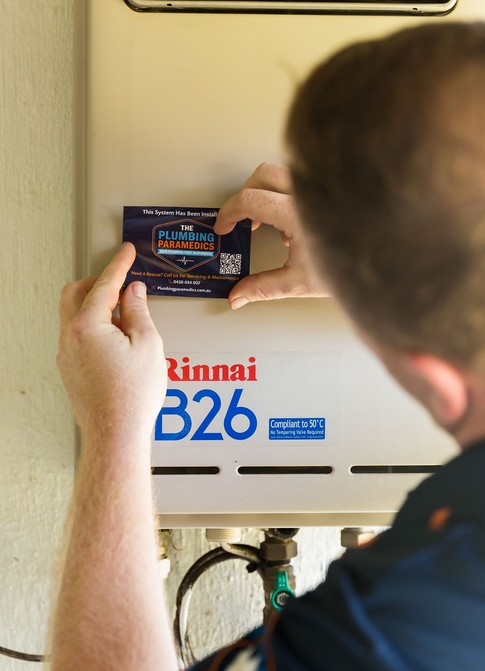
Hot Water System Lifespan at a Glance
| System type | Typical lifespan | What we see locally |
|---|---|---|
| Electric storage | 8-12 years | Often fails around 10 years, anode is usually the reason |
| Gas storage | 8-12 years | Similar to electric; burner issues can appear earlier |
| Continuous flow gas | 15-20 years | Longest lifespan if serviced, heat exchanger is the wear point |
| Heat pump | 10-15 years | Compressor is what wears; needs annual filter checks |
| Solar (with boost) | Tank 10-15 yrs / Panels 15-20+ yrs | Boost element and tank usually go before the panels do |
If your unit is past the upper end of its bracket, it’s not automatically dead, but you’re on borrowed time. Plan the replacement now, on a weekday, with hot water still running. Don’t wait until it fails.
Warning Signs Your Hot Water System Is About to Fail
These are the signs we get called out for and in roughly the order they show up:
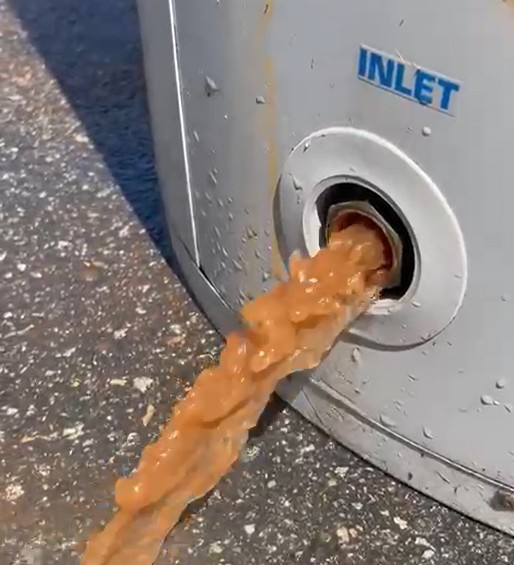
- Rust-coloured water from hot taps only: the tank lining is corroding
- Sediment or grit in the bath: same cause, further along
- Banging or rumbling during heat cycles: sediment build-up at the base
- Hot water runs out faster than it used to: reduced effective tank volume
- Slow recovery after use: second shower is lukewarm even after an hour
- Water pooling at the base: or rust streaks on the casing
- Pilot light won’t stay lit , on gas storage units
- PTR valve dripping constantly: or discharging more than usual
Getting two or more of these on a unit over 8 years old? That’s a replacement conversation, not a repair call. Ring us on 0430 054 007 and we’ll give you a straight answer.
Should You Repair or Replace?
The rule we use: if the repair costs more than half the replacement and the unit is past 75% of its expected lifespan, replace it. Here’s how that plays out in practice.
Repair makes sense when:
- The unit is under 7 years old
- The tank itself is sound, no leaks, no rust streaks
- It’s a single defined fault: element, thermostat, gas valve, anode, or pilot assembly
- Parts are still available from the manufacturer
- The repair quote is under 40% of replacement cost
Replace when:
- The tank is leaking from the storage body or tank (not a fitting)
- The unit is over 8 years old AND showing two or more warning signs
- You’ve had two repairs in the last 18 months
- The unit is undersized for your current household
- You’re eligible for a rebate that offsets the upgrade cost
A leaking tank body is not repairable. Once the steel is breached, the tank is done, no matter how recently you replaced the element. We’d rather tell you that on the phone than waste your time with a callout.
What Does Hot Water Replacement Cost in Sydney?
Pricing varies because the unit drives the cost. A like-for-like electric swap is the most straightforward path. Heat pump and solar upgrades cost more upfront but attract federal and state rebates for eligible households.
| Job | Guide price | Notes |
|---|---|---|
| Element or thermostat repair | From $350 | Straightforward swap on an accessible unit |
| Gas valve or pilot assembly repair | From $450 | Parts dependent |
| Like-for-like electric storage replacement | From $1,800 | Supply and install |
| Like-for-like gas storage replacement | From $2,200 | Supply and install |
| Continuous flow gas upgrade | From $2,800 | Supply and install |
| Heat pump install | From $4,500 (before rebate) | Varies with brand and complexity |
Guide prices for the Hills District. Gas work in NSW is legally restricted to licensed gas fitters, always check for a licence number on any quote.
No hot water while you wait for your replacement? If we need to order in your new unit, we’ll loan you a temporary hot water system to keep your household running in the meantime. No cold showers while you wait, that’s just part of the service.
Hills District: What We See Suburb by Suburb
Most of the Hills District runs on Sydney Water mains, moderately soft water and consistent pressure, which is easier on tanks than regional NSW. That said, we see patterns by area.
- Newer estates (Box Hill, The Ponds, Rouse Hill): Tanks are usually well-installed but often undersized. A family of four growing into a 250L tank fitted for a couple runs out of hot water fast.
- Older Castle Hill and Baulkham Hills homes: Original tanks from 2008-2012 are hitting end of life right now. If yours is from the original build, get it looked at.
- Two-storey homes with a slab-mounted tank: Watch for rust on the casing where it meets the concrete, moisture wicks up and corrodes from the outside in.
- Solar systems from the 2010-2015 wave: Panels are usually still fine. The storage tank and boost element are what’s due.
- Upper Hills (Wisemans Ferry direction, tank or bore water): Higher mineral content and variable pressure shorten tank life and chew through tempering valves. We service these homes, the maintenance interval is just tighter.
How to Make Your Hot Water System Last Longer
Three things actually extend hot water system life in our experience:
- Service every 5 years and replace the anode at the same time. A $200 anode swap can buy you 3-5 more years of tank life, and most manufacturer warranties require it.
- Flush the tank annually to clear sediment. Sediment settles at the base over time, forcing the element to work harder and shortening tank life. A flush takes around 15 minutes, attach a hose to the drain valve, run it until the water clears. If you’re not comfortable doing it yourself, we can do it as part of a service.
- Check the PTR valve once a year. Lift the lever briefly to confirm it discharges and reseats. A seized PTR is a safety issue, not just a hot water inconvenience.
- Keep your mains pressure in check. Above 500 kPa, fit a pressure-reducing valve. High pressure is hard on every fitting in the house.
Honest note: if your unit is past 12 years and has never been serviced, a service won’t reverse the corrosion already there, but it will tell you how much life is left so you can plan the replacement on your timeline, not the tank’s
What to Do When It Fails
Call us and we can step you through what you need to do, especially if the tank is leaking or you are worried about the gas or electrical components
When a hot water system goes properly, three things matter: stop the leak, get hot water back, and don’t make the replacement decision under pressure.
- Turn off the cold water isolation valve at the unit (on the inlet pipe)
- For electric: switch off the dedicated circuit at the meter box
- For gas: turn off the gas isolation valve at the meter or at the unit
- Then call us
📞 The Plumbing Paramedics | 0430 054 007 On call 7 days a week across the Hills District. Licensed plumbers and gas fitters (NSW Licence 285875C / 310989C). We’ll give you a straight answer on repair vs replacement, and get your hot water back on.
Technical Background
For those who want the detail behind the numbers, this section covers the three main failure mechanisms we see in Hills District tanks.
Sediment build-up
Minerals in the water settle as the tank heats and cools. Over years, that layer at the base acts like an insulating blanket between the heating element and the water. The element works harder, the steel above it overheats, and the tank fails earlier. Sydney’s mains water runs at roughly 40-50 mg/L total hardness, softer than most of regional NSW, but sediment still builds up in any storage system over time. Banging or rumbling during heat cycles is the usual sign.
Sacrificial anode failure
Storage tanks have a magnesium or aluminium rod inside, the sacrificial anode, that corrodes instead of the tank lining. Most anodes are designed to last around 5 years. If nobody has replaced yours in a decade, the rod is long gone and the tank itself is corroding from the inside out. This is the most common reason a 12-year-old electric storage tank starts leaking from the base. Replacing it during a service costs around $200 and regularly buys 3-5 extra years of tank life.
Electrolysis from mixed metals
When copper pipework connects directly to a steel tank without a dielectric union, an electrochemical reaction eats the steel. We see this in older Hills District homes where a previous owner did their own repair work. The tank looks fine for years, then suddenly develops a pinhole leak. AS/NZS 3500.4 requires correct fittings for exactly this reason, and it’s why DIY hot water work typically voids both the manufacturer warranty and home insurance cover for water damage.
What should you do when yours finally goes?
When a hot water system fails properly, three things matter: stopping the leak, getting hot water back, and not making the replacement decision under pressure. If the unit is leaking, turn off the cold water isolation valve at the unit (usually on the inlet pipe). For electric units, switch off the dedicated circuit at the meter box. For gas units, turn off the gas isolation valve at the meter or at the unit. Then call us.
We’re on call 7 days a week across the Hills District for hot water failures. Daniel and the team are licensed plumbers (NSW Fair Trading licence 285875C) and licensed gas fitters (310989C), so we can handle both electric and gas systems without a second trade on the job. We’ll give you a straight answer on whether yours can be repaired or needs replacing, and what the timeline looks like to get hot water back on. If you’d rather not be making this decision at 9pm on a Sunday, book a check while it’s still working. See our emergency plumbing page or call 0430 054 007.
For more on the services around hot water, see our hot water services page covering install, repair, and replacement across gas and electric units.
FAQs
How long does a gas hot water system last?
Gas storage runs 8 to 12 years, similar to electric. Continuous flow (instantaneous) gas units last 15 to 20 years if serviced. Continuous flow tends to fail at the heat exchanger; storage tanks at the lining.
Is it worth repairing a 10-year-old hot water system?
Sometimes. If the fault is a single component, element, thermostat, gas valve, the tank is sound, and the repair is under 40% of replacement cost, it’s worth doing. At 10 years you’re past 75% of typical lifespan for a storage unit, so we’d quote both options and let you decide.
Are there rebates for replacing a hot water system in NSW?
Yes, for eligible upgrades. The federal Small-scale Technology Certificate scheme supports heat pump and solar replacements. The NSW Energy Savings Scheme offers additional incentives for qualifying installs. Eligibility depends on the system type, your household, and installer accreditation, ask us and we’ll confirm what applies.
Can I install a hot water system myself in NSW?
No. Hot water installation is licensed plumbing work in NSW, and gas hot water requires a licensed gas fitter. DIY installs void manufacturer warranties, void home insurance cover for water damage, and can be genuinely unsafe. Licence checks are public at the NSW OneGov Public Register.
The Plumbing Paramedics | Licensed plumbers and gas fitters serving the Hills District | NSW Plumbing Contractor Licence 285875C | NSW Gas Fitting Contractor Licence 310989C | 0430 054 007 | Hot water services

Our Services
Get A Free Quote
Contact us today for a free, no-obligation quote on your plumbing needs.