Grease Trap Installation Sydney: Grease Traps for Commercial Kitchens
We install grease traps for cafés, restaurants and commercial kitchens across Sydney. We’re available 7 days a week for urgent jobs.


Grease Trap Installation Planned Around Sydney Water Approval
Trust the commercial drainage experts at The Plumbing Paramedics
Fats, oils and grease (FOG) might seem harmless going down the drain, but in large volumes, they can wreak havoc on commercial plumbing and the public sewer network. Without a functioning grease trap, your sinks can back up, wastewater can overflow, and your business could be slapped with fines or shutdown notices from Sydney Water.
Why Grease Trap Installation Matters for Your Business
Sydney commercial kitchens, from cafés to food courts, need a properly sized grease trap approved by Sydney Water. The Plumbing Paramedics are licensed plumbers experienced in all aspects of commercial grease trap installation, connection, backflow prevention, and maintenance access, so your system is both legal and reliable.
What Is a Grease Trap?
A grease trap (also called a grease interceptor) is a plumbing device that captures fats, oils, grease and solids (FOGS) from wastewater before it enters the sewer. Water flows into the trap, where grease floats to the top, solids sink to the bottom, and the cleaner water flows out to the wastewater system.
The design is simple, but effective. And in Sydney, it’s not optional. Sydney Water requires a grease trap and a trade waste agreement for most businesses that cook or serve hot food.
Sydney Water Approval: All grease traps must be approved by Sydney Water prior to installation. See grease trap request form Sydney Water also keeps a list of approved grease traps to choose from.
Who Needs Grease Trap Installation in Sydney?
Sydney Water’s guide for retail food businesses sets out who needs a grease trap. The list covers cafés and coffee shops serving hot food, takeaway shops, food court outlets, pizza shops, restaurants, canteens, childcare and school kitchens, hospital and nursing home kitchens, function centres, hotel kitchens and butchers.
A few food businesses don’t need one. The same guide lists no grease trap for an ice cream parlour or a bakery selling hot bread, although both still need bucket traps in the sinks and floor wastes. A bakery that cooks products containing meat on site does need a grease trap. A normal home kitchen isn’t covered, but a home-based food business selling at markets, school canteens or online is treated as a commercial food business.
Not sure where your business fits? Call us and we’ll check it against Sydney Water’s guide with you.
Link: “Sydney Water’s guide for retail food businesses” links to https://www.sydneywater.com.au/content/dam/sydneywater/documents/plumbing-for-retail-food-businesses.pdf
Need a Plumber You Can Rely On?
We’re available 7 days a week across Sydney, ready to tackle any plumbing job, big or small.
Count on fast response times, licensed professionals, and upfront, honest pricing with no hidden surprises.

What Sydney Locals Say About Us


Grease Trap Installation Services We Provide
- Grease trap installation to Sydney Water requirements
- System design for both new builds and kitchen upgrades
- Commercial plumbing compliance and backflow prevention
- Grease trap sizing and location planning
- Coordination with Sydney Water & trade waste permits
- Grease trap repairs
Whether you run a small takeaway or a large production kitchen, we help you choose the right trap and make sure it’s installed to meet all AS/NZS 3500 plumbing and Sydney Water trade waste standards.
Grease Trap Installation
For a new fit-out, the grease trap is planned with the kitchen layout, so it sits close to the sinks and drains by gravity where the site allows. Call us before the floor plan is locked in, so the trap and its drainage are planned together. If the kitchen also needs gas, our commercial gas fitters install new gas lines for commercial kitchens.
Grease Trap Replacement and Upgrades
A grease trap wears out eventually. Sydney Water says old traps can become hard to clean, develop holes and start to leak, and that replacing a trap that has held grease for years is often better than repairing it.
A trap can also become too small when the menu changes, trading hours get longer or more cooking equipment goes in. We replace failing traps and upgrade undersized ones, and the trade waste agreement is varied through Sydney Water Tap in before the work starts.
Grease Trap Repairs
Some faults can be fixed without replacing the trap. Lids, frames, baffles and the inlet and outlet fittings can all be repaired, along with the pipes running in and out. A damaged or missing baffle stops the trap separating grease, so it’s worth fixing straight away.
Grease Trap Installation Steps, From Approval to Sign-Off
Here’s how a grease trap installation usually runs for a Sydney food business.
- Sizing and placement: we assess your business size, number of sinks and dishwasher output, then work out the trap size and where it can go.
- Sydney Water approval: an application to discharge trade wastewater goes in through Sydney Water Tap in, and the property owner or managing agent has to approve it. Sydney Water says its assessment usually takes less than 21 days, so apply before you buy any equipment.
- Choosing the trap: it has to be on Sydney Water’s listed pre-treatment for food businesses and sized for your maximum hourly flow, now and into the future.
- Installation: a licensed plumber installs the grease trap to the manufacturer’s instructions, Sydney Water’s requirements and the Plumbing Code of Australia, along with the bucket traps, vents, boundary trap and backflow protection the site needs.
- Inspection and paperwork: the plumber arranges a plumbing and drainage inspection with NSW Fair Trading, gives Fair Trading an updated sewer service diagram, and gives you a Certificate of Compliance. Keep it with your business records.
- Pump-out contractor: you choose an authorised Wastesafe transporter and tell Sydney Water who it is, either through the transporter or by emailing the form to wastesafe@sydneywater.com.au.
Choosing the Right Grease Trap: Size and Location Matter
Grease traps must be sized based on wastewater volume, appliance output, and kitchen size. The minimum size required is 1000 litres, but many businesses need larger systems.
Minimum sizes depend on the type of business, and our guide to grease trap requirements in NSW lists them.
Installing the trap close to the kitchen is best. The longer grease travels through a pipe, the more likely it is to cool, solidify and block the line. The trap must also be easily accessible for vacuum pump trucks.
A trap in the wrong spot, or one that’s too small, usually means a costly retrofit later.
Sydney Water Requirements for Grease Trap Installation
Sydney Water publishes installation requirements for grease traps, including a drawing of the preferred drainage layout. These are the points that most often decide where a trap can go and what goes in with it.
Grease Trap Venting
A grease trap has to be vented with pipework at least 100 mm in diameter. Sydney Water asks for two 100 mm vents for cross ventilation, one on the inlet line and one on the grease trap, and it doesn’t allow air admittance valves to vent the trap.
Grease Trap Outlet Level
The outlet has to sit 150 mm lower than the inlet. If it sits too low, the trap holds less than its rated capacity. If it sits too high, the inlet can end up under water.
Backflow Prevention Near the Grease Trap
There has to be a tap within five metres of the grease trap, with a backflow prevention device on the inlet side of the tap. The property also needs a backflow containment device at the boundary, next to the water meter, installed and tested by a backflow accredited plumber. Our backflow prevention page explains the yearly testing.
Bucket Traps and the Boundary Trap
Every prep sink and floor waste in the kitchen needs an authorised in-sink or in-floor bucket trap, which catches food scraps before they reach the grease trap. A food premises with a gravity connection to the sewer also needs a boundary trap. If there isn’t one, it goes in at the boundary or at the point of connection.
Grease Trap Clearance and Safe Access
Sydney Water asks for clear space above the grease trap no less than the trap’s depth, so the lid can come off and the trap can be serviced. The waste tanker needs to park as close to the trap as possible. Above ground installations need a platform and steps built to Australian Standard 1657.
Above Ground, In-Ground and Pumped Grease Trap Installations
Sydney Water prefers installations where the grease trap drains by gravity to the sewer. Where the sewer grade won’t allow it, the preferred design drains through the grease trap to a pump well and pumps from there, and pumping into the grease trap is the least preferred option.
An under-sink pump unit needs Sydney Water’s permission and a written reason why the kitchen can’t drain to the grease trap by gravity. The pump unit has to be cleaned out each time the trap is serviced.
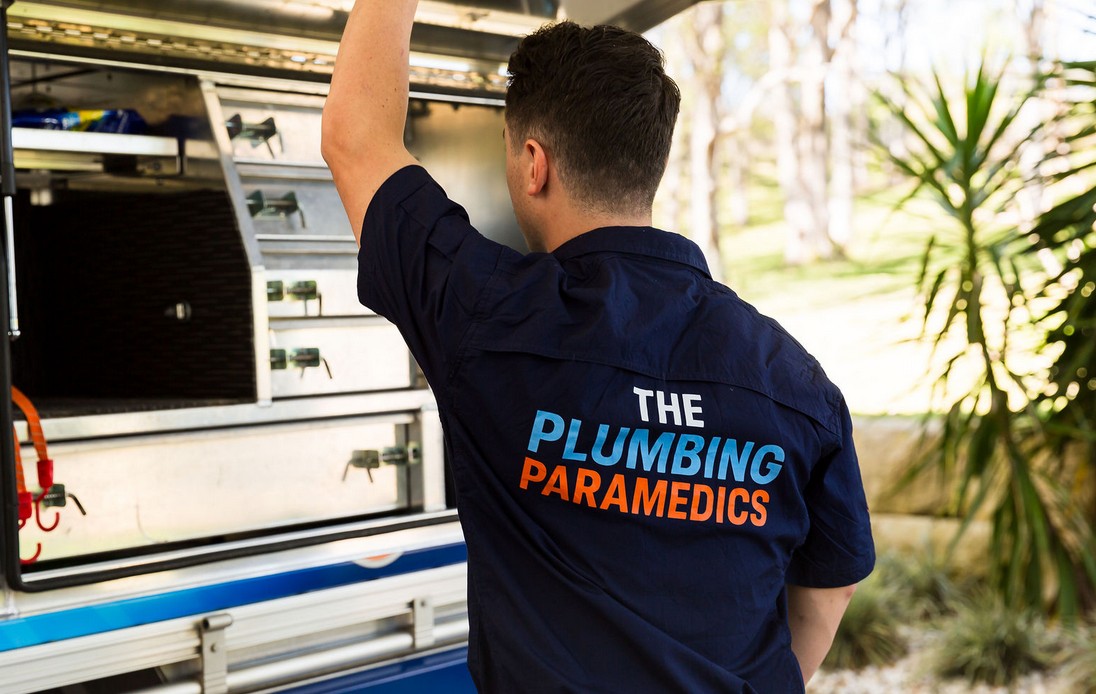

Trust the commercial drainage experts at The Plumbing Paramedics
Fats, oils and grease (FOG) might seem harmless going down the drain, but in large volumes they block commercial plumbing and the public sewer network. Without a working grease trap, your sinks can back up and wastewater can overflow. If a business discharges trade wastewater without approval, Sydney Water may disconnect its trade waste service and disconnect or restrict its water service.
In a shopping centre or food court, tenancies can share communal grease traps as long as the total capacity stays under 30,000 litres. Our commercial plumbers look after strata buildings, shops and commercial kitchens across north-west Sydney.
Grease Trap Maintenance After Installation
Installing the right trap is only half the job. It has to be maintained to prevent odours, blockages and breaches of your trade waste agreement.
Warning signs your trap needs pumping:
- Slow-draining sinks
- Gurgling noises from pipes
- Foul smells near drains or floor waste
A Wastesafe transporter authorised by Sydney Water pumps the trap out on the schedule Sydney Water sets for it.
We clear blocked grease traps so you can get back to cooking.
Call Now for Expert Grease Trap Installation
Whether you’re building a new kitchen or need to upgrade your grease system to meet compliance, The Plumbing Paramedics have your back. We’ll take care of sizing, approvals, installation and repairs, so you can focus on running your kitchen.
Call 0430 054 007 to book our grease trap installation service, or request a quote online. We’re based at Unit 15/593 Withers Rd, Rouse Hill, and work across the Hills District and north-west Sydney. We’re open Monday to Saturday 6am to 8pm and Sunday 6am to 12pm. You can check our plumbing licence, 285875C, on the NSW Government licence check.
Related Emergency Services
Using The Leading Brands
We work with trusted industry brands to ensure every product we install is reliable, durable, and built to last.








Our Easy 3-Step Process
At The Plumbing Paramedics, we keep it simple and stress-free. Our streamlined 3-step process is designed to give you fast, reliable plumbing solutions without any confusion or delays.

1
Book Now
Call us or book online, and our friendly team is ready to help 7 days a week. We’ll quickly understand your plumbing issue and schedule a visit that fits your time.
2
Upfront Pricing
We’ll assess the job and provide a fixed quote on the spot. No hidden fees, just clear pricing and complete transparency from start to finish.
3
Job Done
Our licensed plumbers show up on time, fully prepared. We get the job done right, clean up after ourselves, and leave your space just as we found it.
Plumbing Problems can be stressful.
That’s why we’ve made our process simple, responsive, and focused on quality from the moment you call.
Clear Upfront Pricing
After inspecting the issue, we provide a fixed quote—no hidden fees, no surprises.
Local Plumbers
Need a plumber fast? Our fully stocked vans are always nearby and ready to respond.
Customer Satisfaction
Your satisfaction is our mission on every visit—quality service you can count on.
Big or Small
From leaky taps to full installations—no job is too small or too complex for our team.