
If your business cooks or serves hot food and discharges into the Sydney Water sewer, you need an authorised grease trap, bucket traps in every prep sink and floor waste, and approval from Sydney Water before any of it goes in.
Once it’s installed, the trap has to be pumped out by an authorised Wastesafe transporter as often as your agreement says.
That’s the short answer. The rest of this article explains how it works, what size trap you’re likely to need, and the mistakes that end up costing food businesses money.
Why Grease Traps Are Required
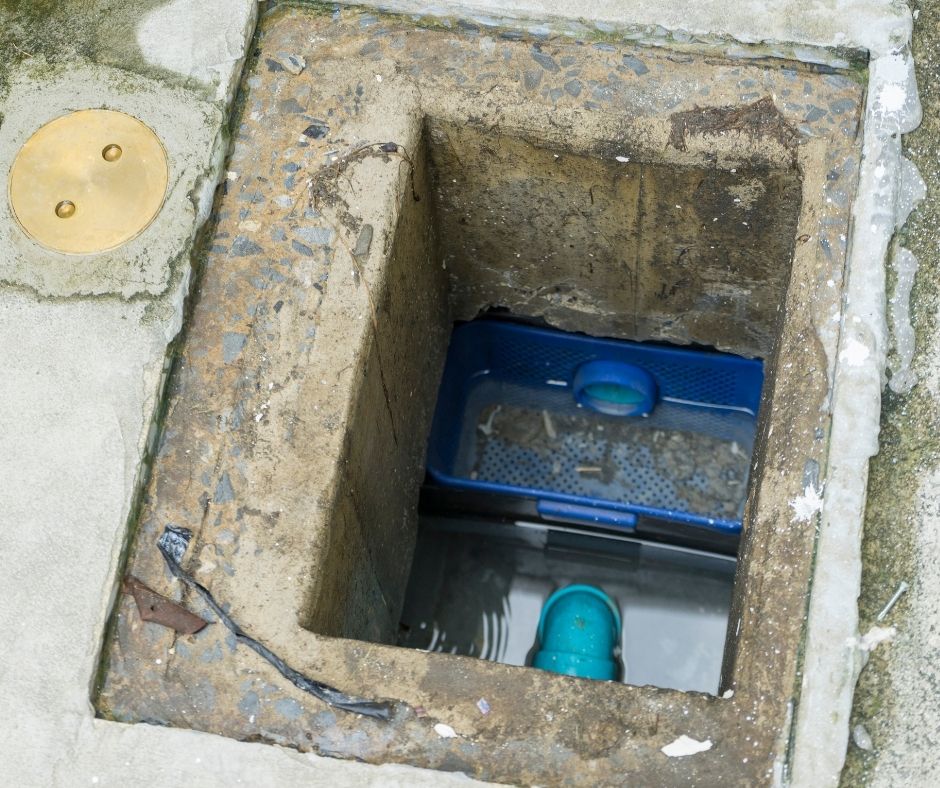
Fats, oils and grease don’t stay liquid. They go down the sink warm, cool in the pipes and set hard. One kitchen doing this adds up to a problem. Thousands of kitchens across Sydney doing it cause blockages and overflows in the public wastewater system, and some of that eventually ends up in rivers and the ocean.
A grease trap slows the wastewater down and lets it cool, so the grease separates and floats while the water flows on. Bucket traps in the sinks and floor wastes catch food scraps before they get that far. Together they stop your waste becoming everyone’s problem.
Who Sets the Rules
Most business owners get confused here because there’s more than one authority involved.
Sydney Water regulates what goes into the sewer. Anything beyond normal household wastewater is classed as trade wastewater, and you need their permission to discharge it. They also decide which grease traps are acceptable, how big yours needs to be and how often it gets pumped out.
Requirements are published at sydneywater.com.au. and the installation guide here
Your local council regulates you as a food business. Council inspectors look at how your premises operates, including how you handle waste.
If your business is outside the Sydney Water area, your local water utility takes Sydney Water’s role and its requirements may differ.
What You Need Before You Open
Sydney Water approval comes first. You apply to discharge trade wastewater through Sydney Water Read the process and application and they’ll contact you to discuss what your business needs.
Applying costs nothing. Do it before you buy or install any equipment, because buying a trap that isn’t approved for your site is an expensive way to start.
You’ll then need the right pre-treatment for your kitchen. For most food businesses that means:
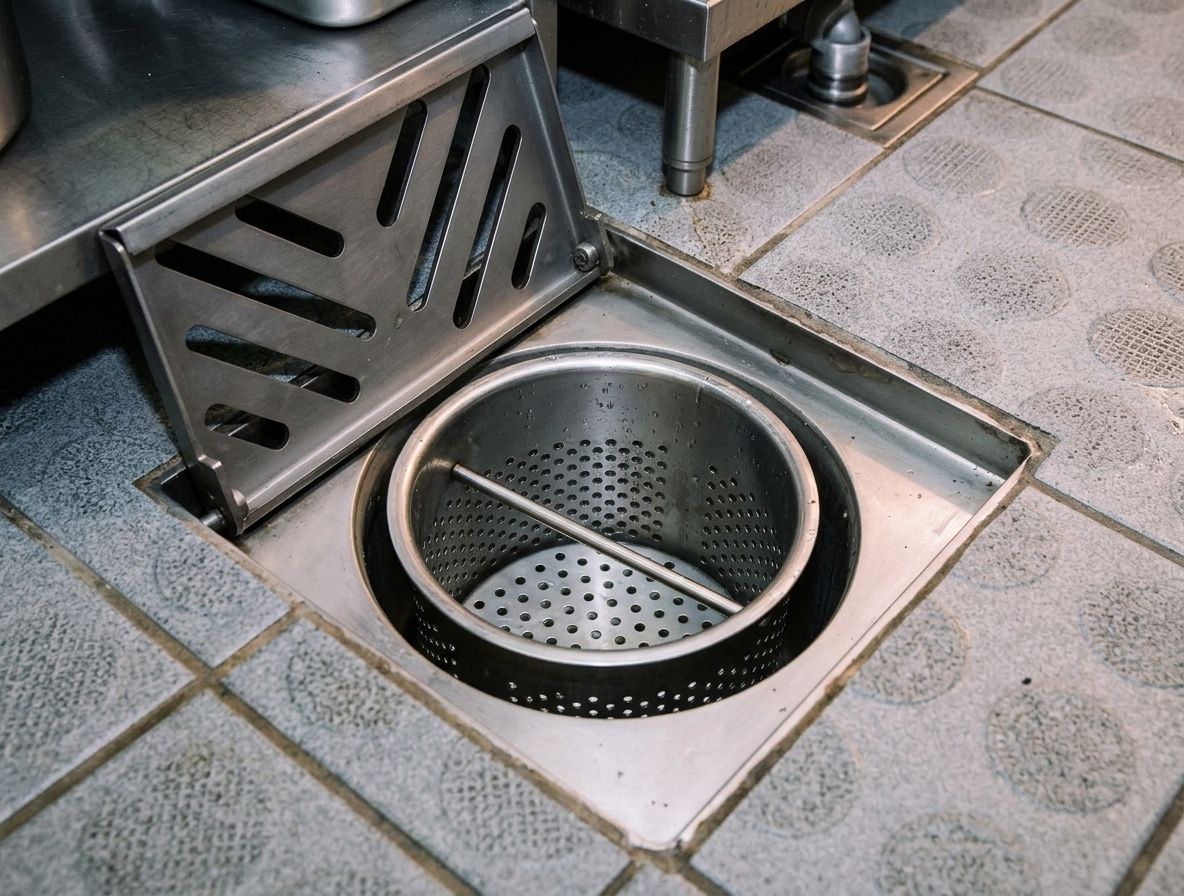
- In-sink bucket traps: fitted to every food prep sink in the kitchen and food preparation areas.
- In-floor bucket traps: fitted to every floor waste in food preparation and cooking areas.
- A correctly sized grease trap: an authorised model from Sydney Water’s approved list, sized for your maximum hourly flow.
Finally, the trap has to be installed by a licensed plumber in line with the manufacturer’s instructions, Sydney Water’s requirements and the Plumbing Code of Australia. When the job is finished your plumber should give you a certificate of compliance. Keep it.
We install grease traps for cafés, restaurants and takeaway shops across the Hills District and Northwest Sydney, from Castle Hill and Bella Vista through to Rouse Hill and Marsden Park. If you’re fitting out a new premises, call us early and we can work through sizing and placement with you before you commit to anything.
How Grease Trap Sizing Works
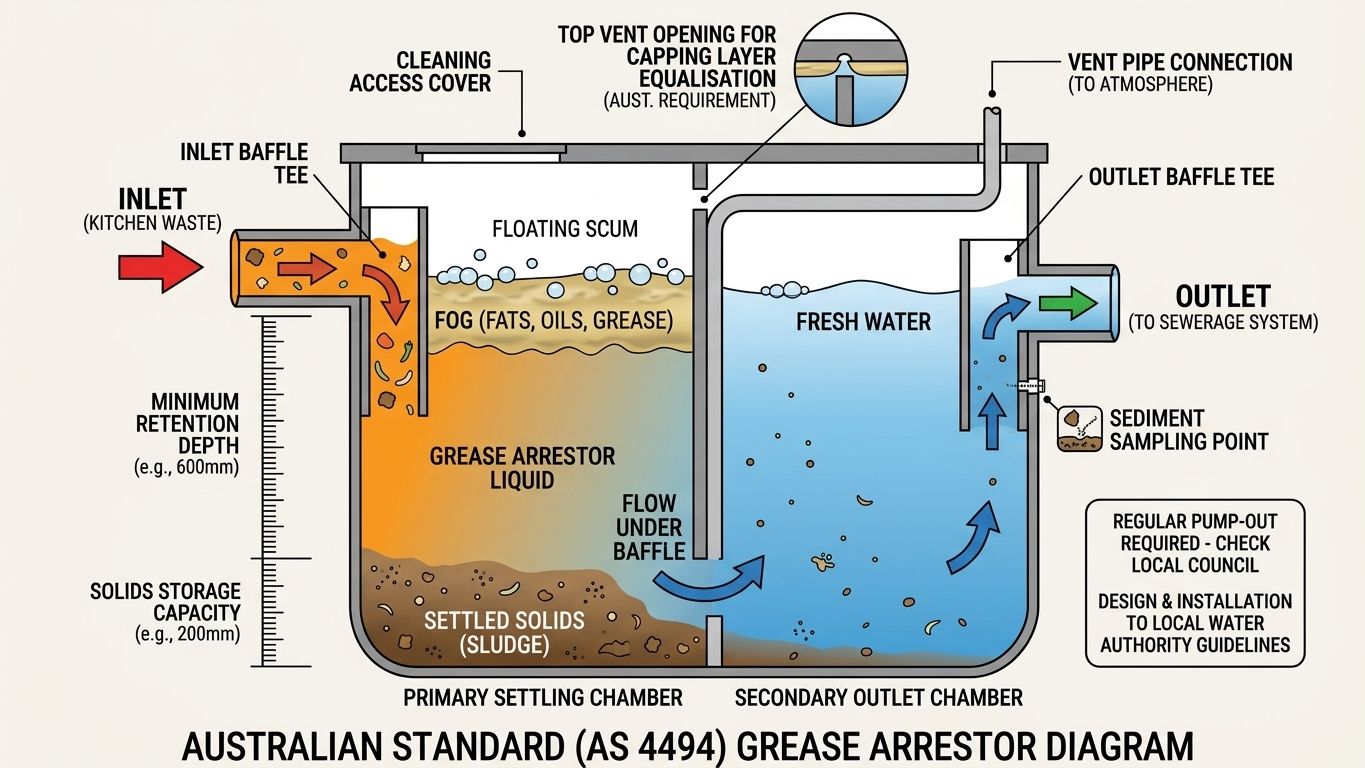
Sydney Water only accepts grease traps between 1,000 and 5,000 litres. Anything smaller can’t capture grease properly. Anything larger becomes too hard to clean and pump out. Where a site needs more capacity, such as a shopping centre with a busy food court, it may need several traps, up to a maximum of 30,000 litres in total. Beyond that, the site has to install centralised treatment such as dissolved air flotation.
Sydney Water publishes minimum sizes for common types of business. A few examples:
- Cafés, snack bars and coffee lounges serving hot food: 1,000 litres.
- Takeaway shops, food court outlets, pizza shops and charcoal chicken: 1,000 litres.
- Restaurants with 1 to 69 seats: 1,000 litres.
- Restaurants with 70 to 199 seats: 1,500 litres.
- Restaurants with 200 to 399 seats: 2,000 litres.
- Restaurants and function centres with 800 to 1,000 seats: 5,000 litres.
- Supermarkets with a chicken cooker: 1,500 litres plus a grease removal device.
These are minimums, not targets. Sydney Water’s advice is to size for your maximum hourly flow now and into the future. If you’re planning to extend your hours or add a fryer next year, it’s cheaper to allow for that now than to dig up the floor later. An undersized trap won’t treat your wastewater properly, and Sydney Water can ask you to install additional pre-treatment.
Installation Requirements Your Plumber Should Be Following
Where the trap goes and how it’s connected matters as much as its size. Sydney Water’s requirements include:
- Everything flows to the trap: wastewater from food prep areas, floor wastes, kitchen sinks, dishwashers and garbage areas all has to drain through it.
- Close to the kitchen: long pipe runs clog with grease before it ever reaches the trap. Where they can’t be avoided, as in some shopping centres, heat tracing or a steeper pipe grade helps.
- Gravity drainage: the trap should drain to the sewer by gravity. Pumped systems cost more to run, and if the pump fails the trap overflows inside your premises.
- Proper venting: the wastewater needs to cool for the grease to separate. A poorly vented trap runs too hot and lets grease straight through.
- Room above the trap: the clear space above it should be at least equal to the trap’s depth so the lid can be opened and the trap serviced.
- Safe tanker access: your waste contractor needs to park close by, and Sydney Water needs safe access for inspections. Multi-storey buildings may need a fixed pump-out line running to street level.
What You Have to Keep Doing After It’s Installed
This is the part that catches people out. A grease trap isn’t a one-off purchase. It’s an ongoing obligation under your agreement with Sydney Water.
Your agreement sets how often the trap must be pumped out, based on its size, how much waste you produce and how greasy it is. The pump-out has to be done by an authorised Wastesafe transporter, who empties the trap, cleans and scrapes the internal surfaces, and scans a barcode on site so Sydney Water has a record of the service. Sydney Water charges a management fee for the Wastesafe system, and your transporter bills you separately for the pump-out and disposal.
The schedule in your agreement is the minimum. If the trap is blocking or smelling before the next pump-out is due, your kitchen is producing more grease than the schedule allows for and it’s worth talking to us or Sydney Water about it.
You’re also responsible for keeping the trap in working order. A broken baffle, a cracked lid or a trap that’s started leaking isn’t doing its job. Grease traps last a long time, but they do wear out, and old traps that have held grease for years can be hard to repair. A licensed plumber can tell you whether repair or replacement makes more sense. Either way, you’ll need to apply through Tap in to vary your agreement before the work goes ahead.
Tell Sydney Water when things change, too. A new menu, longer trading hours, extra cooking equipment or a change in the type of business can all change what’s required.
Things That Will Get You Into Trouble
Some common habits breach your agreement or stop the trap working, often both:
- Pouring waste oil down the drain: used cooking oil goes into a container and off-site for recycling, never into the sink or the trap.
- Enzymes, bacteria and odour treatments: Sydney Water doesn’t allow solvents, enzymes, natural or engineered bacteria, odour control agents or pesticides in grease traps.
- Too much detergent: detergent breaks grease down so it passes straight through the trap. Using less saves money and helps the trap do its job.
- Garbage grinders and in-sink disposal units: these aren’t permitted in business premises, and Sydney Water can disconnect a business that installs one.
- Other waste into the trap: waste from machines like vegetable peelers shouldn’t go to the grease trap.
What Happens If You Don’t Comply
Sydney Water can follow up on non-compliance, and continued breaches of your agreement carry consequences, up to disconnection in the case of prohibited equipment. Councils can also act on it during a food premises inspection.
In practice the regulator is rarely the first problem. The first problem is a blocked trap on a Friday, a smell drifting into the dining room and a kitchen that can’t trade until it’s cleared. Staying compliant and keeping your kitchen running are really the same job.
Questions We Get Asked
Do I really need a grease trap for a small café?
If you cook or serve hot food, Sydney Water requires a grease trap regardless of how many seats you have. For a café, snack bar or coffee lounge serving hot food, the minimum is 1,000 litres.
Who decides what size grease trap I need?
Sydney Water sets minimum sizes by type of business, and the final size is based on your maximum hourly flow. We can work through it with you and your Sydney Water application before you buy anything.
Can I install a grease trap myself?
No. It has to be installed by a licensed plumber according to the manufacturer’s instructions, Sydney Water’s requirements and the Plumbing Code of Australia, and you should receive a certificate of compliance at the end.
How often does a grease trap need to be pumped out?
Your Sydney Water agreement sets the frequency based on your trap size, the volume of waste and how greasy it is. If it’s blocking or smelling before the next pump-out, the interval is too long for your kitchen, whatever the paperwork says.
Who is allowed to pump out my grease trap?
Only an authorised Wastesafe transporter. They scan a barcode at each service so Sydney Water can track the waste from your premises through to disposal.
Does it cost anything to apply to Sydney Water?
Applying through Tap in is free. Once you’re operating, Sydney Water charges a management fee for the Wastesafe system and your transporter charges separately for each pump-out.
Can I use enzyme or bacteria treatments to cut down on pump-outs?
No. Sydney Water doesn’t permit enzymes, bacteria, solvents or odour control agents in grease traps, and they won’t reduce the pump-out frequency set in your agreement.
We’ve taken over a café that already has a grease trap. Are we covered?
Not automatically. Contact Sydney Water through Tap in early to confirm whether the existing agreement and trap suit your business, particularly if your menu or hours differ from the previous tenant’s. It’s much easier to sort out before your first inspection than after.
What if our grease trap is now too small?
This happens a lot when a menu changes or trading hours get longer. The trap can be upgraded, but you’ll need to apply to Sydney Water to vary your agreement first. It’s worth doing before undersizing turns into a weekly blockage.
Getting It Right
Most grease trap headaches start with a trap sized for a different business or a pump-out schedule that suits the paperwork rather than the kitchen. Sometimes nobody on site knows who to call.
If you’re opening a new food business, taking over a premises or being chased about a trap you inherited, talk to The Plumbing Paramedics. We install, service and repair grease traps for commercial kitchens across Sydney’s Hills District and Northwest, and we can tell you what your premises is likely to need before you spend anything. Call us on 0430 054 007.
If you run a food business in Sydney you have probably been told you need a grease trap. What nobody explains is who requires it, what you have to do once it is in, and who comes asking if you do not.
This is the plain version.


Our Services
Get A Free Quote
Contact us today for a free, no-obligation quote on your plumbing needs.