

Choosing A Hot Water System For A Hills District Home: Heat Pump vs Gas vs Electric vs Solar
Choosing a hot water system comes down to three things: what energy source you already have, how many people are using hot water in the morning, and whether you’d rather pay less now or less every quarter.
This guide is scenario-based, so find your situation and we’ll tell you your best move. If you want the deep technical detail on any individual system, we have dedicated pages for each one.
📞 Not sure what suits your home? Call us on 0430 054 007 or fill out a contact form, and we’ll give you a straight answer before you commit to anything.
None of these systems is universally best. The right one is the one that suits your house, your bills, and your patience.

Find Your Situation
- You’re considering solar hot water
- You’ve got gas storage and want to cut running costs
- You’ve got electric storage and want to save money
- You already have solar panels and need to replace your hot water
- You have solar panels and a battery
- You’re thinking about getting solar panels
You’ve Got Gas: What Are Your Options?
If your gas hot water system needs replacing, here’s how to think about it.
Got Gas Storage And A Busy Household?
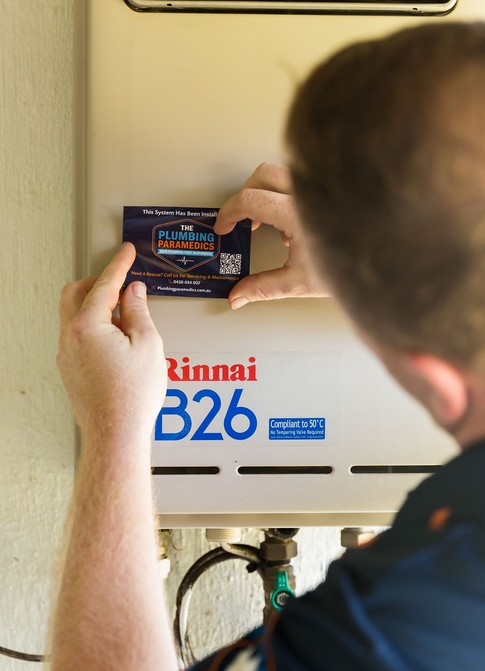
A large gas storage tank works, but it’s worth pausing before defaulting to a like-for-like swap. Gas prices have risen significantly and a storage tank loses heat around the clock even when nobody’s showering. Two gas instantaneous units running in parallel often make more sense, you get the simultaneous flow capacity without the standing heat loss. We’ll run the numbers with you before recommending either way. Brands we regularly install include Rheem, Rinnai, and Dux.
Got Gas Instantaneous And It’s Working Well?
If the system is under 10 years old and performing, you’re probably fine. When it eventually needs replacing, a like-for-like continuous flow swap is still a strong call: low running cost, no tank, no standing heat loss.
Want To Move Away From Gas Entirely?
If you’re thinking about going all-electric, whether for bills, sustainability, or because you’re adding solar, a heat pump is the answer. See the electric section below.
Want To Keep Gas But Reduce Running Costs Further?
Solar hot water with a gas booster is worth considering for owner-occupiers with a long hold horizon and good roof aspect. The solar collectors do the heavy lifting on sunny days and the gas booster covers the rest. See the solar hot water section below for what to know before committing.
You’ve Got Electric Storage: How To Save Money
Electric hot water storage on a standard tariff is the most expensive way to heat water in a Hills District home. If your system is due for replacement, or even if it isn’t, here are your options.
Switch To A Heat Pump
A heat pump uses around a third of the electricity of a standard electric storage unit. For most owner-occupiers this is the strongest long-term move. The upfront cost is higher, from around $4,500 installed, but NSW and federal rebates can take a meaningful amount off that figure. Running costs are significantly lower from day one. Brands worth knowing: Rheem, Stiebel Eltron, Reclaim Energy.
Get Solar Panels And Keep Your Electric System, But Change How It Runs
If your electric storage unit still has life in it, you don’t necessarily need to replace it yet. Add solar panels and a daytime timer to heat during peak solar generation hours, roughly 9am to 3pm. You’re using power you’d otherwise export to the grid for 5 to 10 cents per kilowatt hour, which means your hot water is running on close to free electricity. It’s not as efficient as a heat pump on solar, but it’s a smart interim step that costs very little to set up.
The Strongest Combination: Heat Pump Plus Solar Panels
If you’re replacing the system and adding solar at the same time, a heat pump on a daytime timer is the best performing setup available for a Hills District home. Low running cost, rebate-eligible, and paired with solar the quarterly hot water cost drops significantly. This is what we recommend for most owner-occupiers making the switch.
You Already Have Solar Panels And Need To Replace Your Hot Water System
If you have solar PV on the roof, a like-for-like replacement is often leaving money on the table. Here are your options ranked.
Best Option: Heat Pump On A Daytime Timer
Set the heat pump to run during your peak solar window, roughly 9am to 3pm, and you’re heating water on power you’d otherwise export for next to nothing. A heat pump already uses a third of the electricity of a standard electric unit, so paired with solar the running cost gets very low. This is the combination we recommend most often for Hills District homes with solar.
Good Option: Keep Your Electric Storage, Switch To Daytime Heating
If your existing electric unit still has life in it, reconfiguring it to run during solar hours is a worthwhile step before committing to a full replacement. You lose the efficiency gain of a heat pump but you’re still using free solar power instead of grid electricity. Talk to us before assuming the unit needs replacing.
Worth Knowing: Gas Instantaneous And Solar Don’t Interact
If you have a gas continuous flow unit and solar panels, the solar doesn’t reduce your hot water running cost at all, they’re separate systems. That’s not a reason to switch immediately, but it’s worth factoring in when the gas unit eventually needs replacing.
You Have Solar Panels And A Battery
A battery changes the equation. You’re no longer just optimising for daytime solar generation, you have stored power available in the evening too, which means the timing argument shifts.
A heat pump is still the right system, but the timer flexibility increases. Rather than needing to run strictly during solar hours, the battery covers evening demand too. For households going fully all-electric, solar panels, battery, heat pump hot water, and no gas, the running cost combination is the lowest available for a Hills District home.
If that’s the direction you’re heading, it’s worth designing the whole system together rather than making each decision independently. We can talk through how the hot water fits into that picture.
You’re Planning To Get Solar Panels
Factor your hot water system into the solar decision now, not after the panels go on.
The most cost-effective combination for a Hills District home going solar is solar PV plus a heat pump, with the heat pump running during peak generation hours. This consistently outperforms solar thermal hot water on lifetime cost for most households and is simpler to maintain.
If you’re also considering a battery, design the hot water system as part of that project. A heat pump drawing on battery storage in the evening, combined with daytime solar generation, gives you the lowest possible running cost with the most flexibility.
If your current hot water system is more than 8 years old, replace it before or at the same time as the solar install, not after. Replacing it separately means a second round of installation costs and potentially redoing electrical work. Get it sorted as part of the solar project and the economics stack up better.
You’re Considering Solar Hot Water (Thermal Collectors)
Solar hot water and solar power panels are two completely different things. Solar hot water uses roof-mounted thermal collectors to heat water directly. On a sunny Sydney day, the boost element barely fires. On four straight overcast days, it does. That’s why every solar hot water system needs a booster, either gas or electric, and that booster is what keeps you in hot water when the sun isn’t cooperating.
What To Know Before Committing:
- The collectors and the tank age at different rates. Panels typically last 15 to 20 years. The tank and boost element usually go first, and replacement cost on a solar hot water tank is higher than a standard unit.
- Good north-facing roof aspect matters. If the collectors are competing with existing solar PV panels for roof space, or the aspect isn’t right, the system won’t perform as advertised.
- For most Hills District homes now, solar PV plus a heat pump is the better lifetime-cost play. Solar thermal made more sense before PV became affordable. It still suits some homes, like owner-occupiers with a long hold horizon, good roof aspect, and no competing PV, but it’s worth comparing both before committing.
- If you already have gas connected, a solar hot water system with a gas booster is a strong hybrid option. The solar does the heavy lifting and the gas handles the rest. Lower running cost than gas storage alone, simpler than going fully electric.
How The Costs Compare
| System | Typical Upfront | Running Cost | Lifespan | Best Fit |
|---|---|---|---|---|
| Heat pump | From $4,500 | Low | 10 to 15 years | All-electric homes, solar households |
| Gas storage | From $2,400 | Medium | 8 to 12 years | Gas-connected, 3 to 6+ people |
| Gas instantaneous | From $2,200 | Low to Medium | 10 to 15 years | Gas-connected, 1 to 4 people |
| Electric storage | From $1,800 | High (low on solar or off-peak) | 8 to 12 years | Solar homes on daytime timer |
| Solar thermal | From $5,500 | Very low | Tank 10 to 15 yrs / Panels 15 to 20+ yrs | Long hold, good roof aspect |
Guide prices for the Hills District: supply and install, standard swap, no major rework. Add cost for moving the unit location, upgrading electrical supply, or running new gas line.
📞 Not sure what suits your home? Call us on 0430 054 007 or fill out a contact form, and we’ll give you a straight answer before you commit to anything.
What Rebates Apply In NSW?
NSW Energy Saving Scheme (ESS): covers heat pumps and some solar hot water through accredited providers. Applied as a point-of-sale discount. Ask your installer to show the ESS value as a separate line item on the quote.
Federal Small-Scale Technology Certificates (STCs): apply to solar thermal hot water and eligible heat pumps. Value depends on the system, your postcode zone, and current STC pricing.
Combined, the rebate stack on a heat pump can be several thousand dollars off the upfront cost. Eligibility rules change periodically, so confirm current settings with your installer before committing.
What About Compliance?
Hot water installations in NSW must be done by a licensed plumber and comply with AS/NZS 3500.4. Gas hot water requires a licensed gas fitter and a compliance certificate. Heat pumps need a licensed electrician for the circuit, and we coordinate that as part of the job.
Three things that catch people out:
- Tempering Valve: required on all new installs to bathroom outlets, capped at 50°C at the tap. Older homes often need one retrofitted at the time of the swap.
- Pressure And Temperature Relief Valve: must discharge to a safe location. A discharge line running into a wall cavity is a code breach and a future insurance problem.
- Gas Compliance Certificate: issued for every gas hot water install. Keep it, because your insurer will ask for it if anything goes wrong.
📞 Ready For A Straight Answer? Call the team on 0430 054 007.
We cover Rouse Hill, Castle Hill, Kellyville, Baulkham Hills, Glenwood, Bella Vista, Stanhope Gardens, The Ponds, Beaumont Hills and the wider Hills District.
Licensed plumbers and gas fitters. NSW Licence 285875C / 310989C.
FAQs
Is A Heat Pump Worth It In The Hills District?
For most owner-occupied homes yes, especially with solar. Sydney winters are mild enough that efficiency stays high year-round and the NSW ESS plus federal STCs reduce the upfront cost significantly. The main consideration is install location, because the compressor needs airflow and shouldn’t sit against a bedroom wall.
Should I Replace My System Before It Fails?
If it’s past its typical lifespan and showing warning signs like rust-coloured water, slow recovery or rising bills, planned replacement is cheaper and less stressful than the burst-tank call on a Sunday. See our guide on how long a hot water system lasts and when to replace it.
Can I Switch From Gas To A Heat Pump Without Major Rework?
Sometimes yes, sometimes no. The heat pump needs a power circuit, a condensate drain, and enough airflow. Roughly half the gas-to-heat-pump swaps we do need at least minor electrical work. We check everything on site before committing to a quote.
What Size System Do I Need?
Bedroom count is a starting point, not the full answer. We size based on actual peak-hour demand, so tell us your morning routine and we’ll give you a recommendation that won’t leave someone running cold halfway through their shower.
Which Brands Do You Install?
For heat pumps: Rheem, Stiebel Eltron, Reclaim Energy. For gas instantaneous: Rheem and Rinnai. For gas storage: Rheem, Rinnai, Dux. We’ll recommend the right model for your household and flag lead times on parts before you commit.
What’s The Difference Between Solar Hot Water And Solar Panels?
Solar panels (PV) generate electricity for your whole home. Solar hot water uses separate thermal collectors on the roof to heat water directly, and they don’t generate electricity or interact with your solar panel system. Both need roof space, which is why they can compete with each other.

Our Services
Get A Free Quote
Contact us today for a free, no-obligation quote on your plumbing needs.