Under almost every sink, toilet and vanity in your home sits a braided stainless steel hose about as thick as your thumb. It cost a few dollars, it was installed years ago, and nobody has looked at it since. When one bursts, and they do burst, it can release hundreds of litres of mains-pressure water per hour into your home. If it happens while you’re at work or away for the weekend, you come home to soaked floors, ruined cabinetry and an insurance claim.
Australian insurers consistently rank burst flexible hoses among the leading causes of internal water damage claims. The frustrating part? It’s one of the most preventable plumbing failures there is.
What is a flexi hose, and why do they fail?
Flexible braided hoses connect your fixed pipework to taps, toilets, dishwashers and washing machines. Inside the stainless steel braid is a rubber tube carrying water at full mains pressure. They fail for a handful of predictable reasons:
- Age: most flexi hoses have a service life of around 5 to 10 years. Many Sydney homes are running hoses well past that.
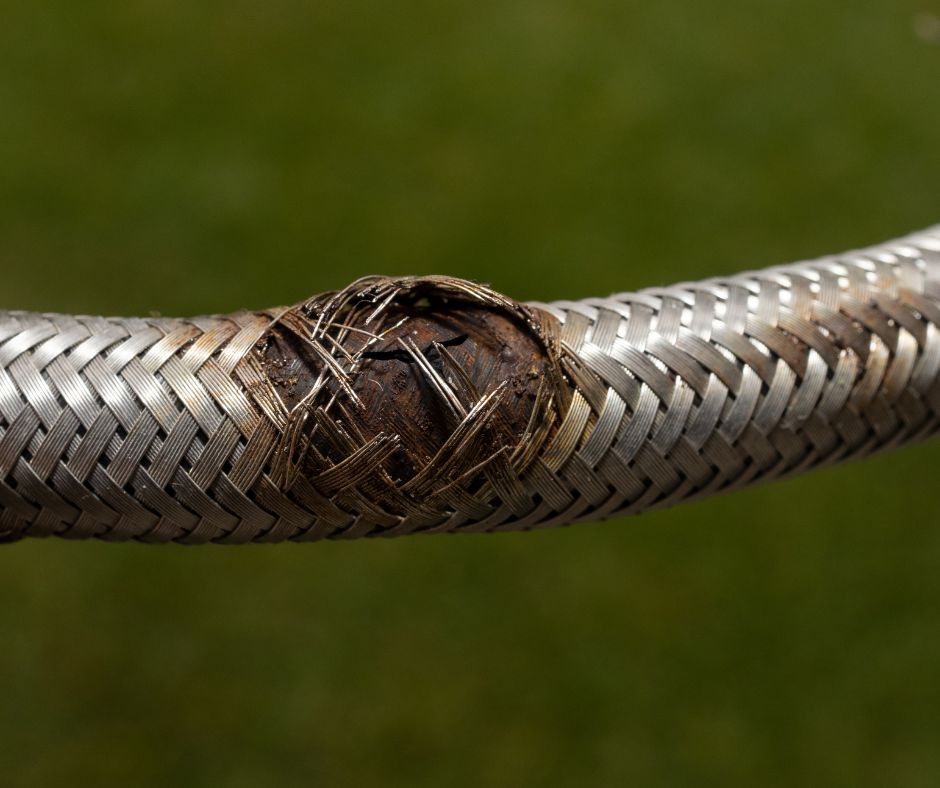
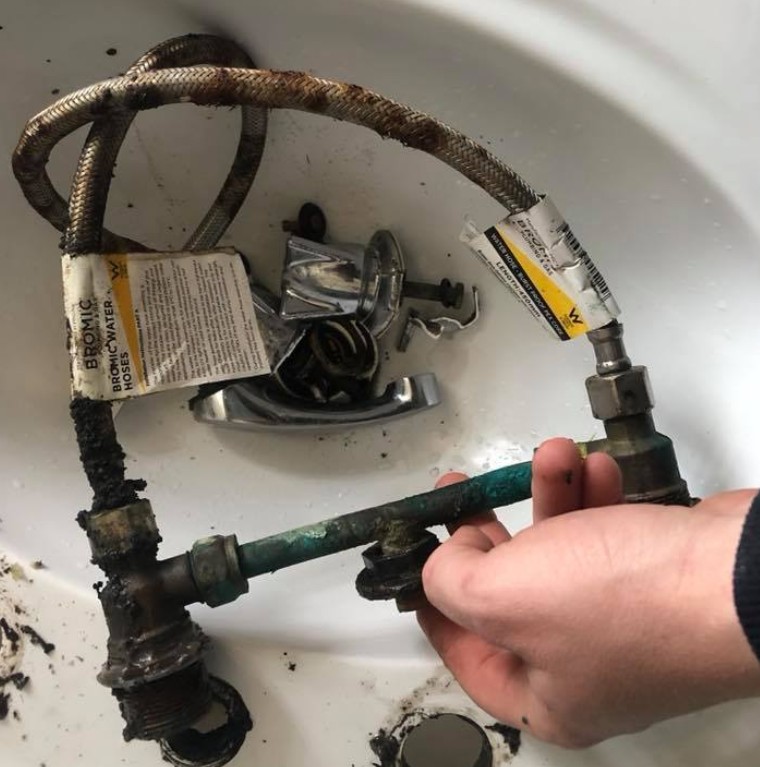
- Corrosion of the braid: rust spots or fraying strands mean the braid can no longer contain the pressure in the rubber liner. Failure is a matter of time.
- Kinks and tension: hoses installed stretched, twisted or kinked fail early. Common under kitchen sinks where storage gets crammed in around them.
- Chemical exposure: storing cleaning chemicals directly against the braid accelerates corrosion, which is exactly where most of us keep them.
- High water pressure: if your home’s pressure is above the recommended 500 kPa, every hose, valve and appliance is under constant extra strain. (We cover this in our post on high water pressure issues in Sydney homes.)
Why the damage is so severe: a burst flexi hose doesn’t drip. It sprays at mains pressure, continuously, until someone turns the water off. Overnight or over a weekend away, that’s thousands of litres through your kitchen or bathroom.
The 5-minute check every homeowner should do twice a year
- Look: open the cupboard under every sink, vanity and behind each toilet. Check the braid for rust spots (often brown or orange discolouration), fraying wires, or bulging.
- Touch: run your fingers along the hose. Any dampness, crustiness or loose strands is a fail.
- Check the installation: the hose should have a gentle curve, no kinks, no twists, not stretched tight.
- Check the date: some hoses have the manufacture year stamped on the collar. Over 10 years old? Replace it regardless of appearance.
- Find your water meter: make sure everyone in the house knows where the main shut-off is. In a burst, minutes matter.
Going away? The single best protection against flexi hose flooding is turning off the water main before holidays. It costs nothing and removes the risk entirely while you’re gone.
When to replace, and what “done properly” looks like
Any hose showing rust, fraying, bulging or kinking should be replaced immediately. The cost of a quality hose professionally installed is trivial next to a water damage claim and weeks of drying out your home. When we replace flexi hoses, we fit quality WaterMark-approved hoses, check your water pressure at the same time, and install mini isolation valves where they’re missing, so any future problem can be shut off at the fixture instead of at the street.
If your home’s pressure tests high, a pressure reducing valve protects every hose and appliance in the house at once. It’s one of the most cost-effective preventative jobs in plumbing.
Already had a burst?
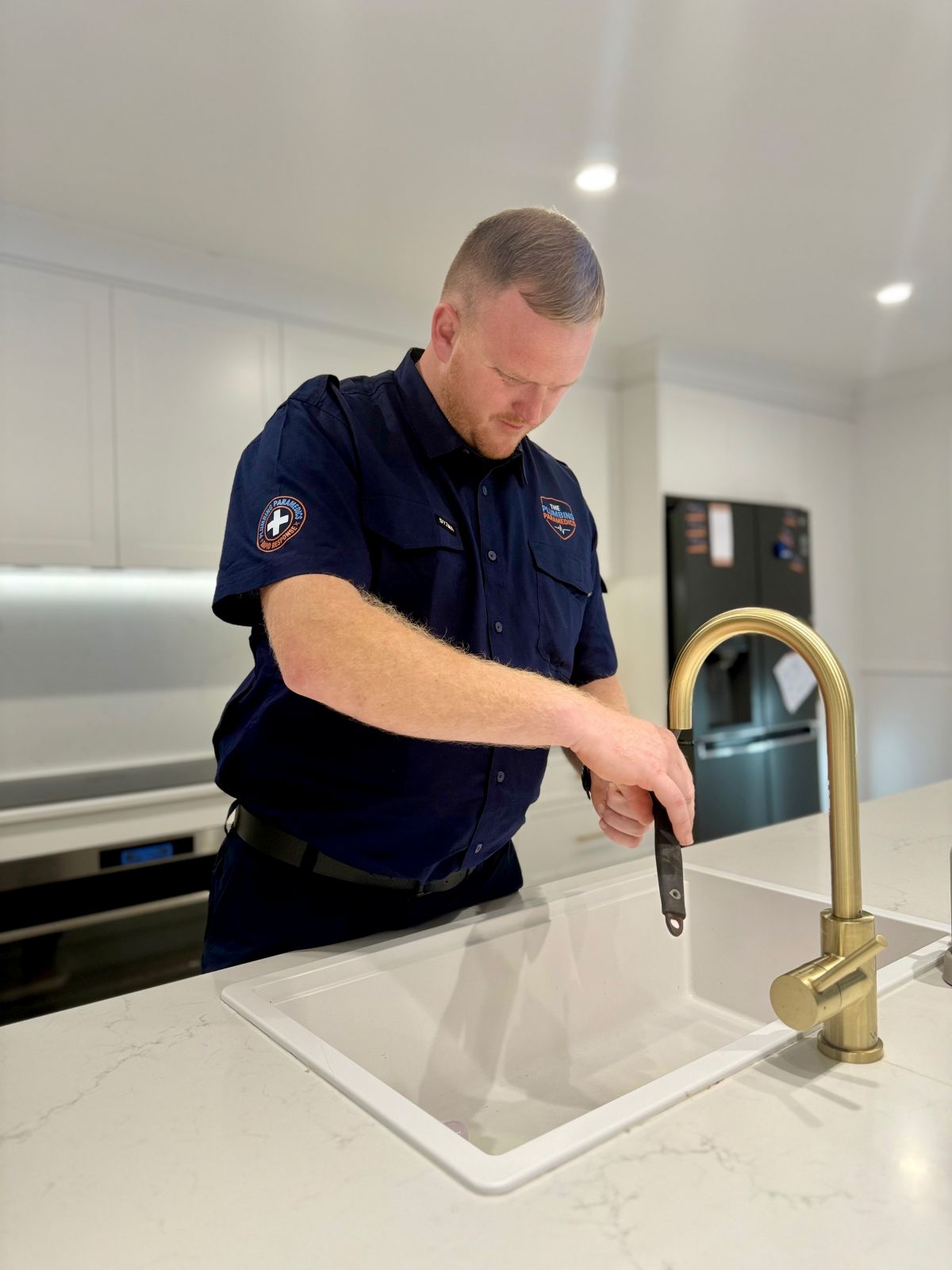
Turn off the water at the meter first, then call us. We provide emergency burst pipe and flexi hose response 7 days a week across the Hills District, North West Sydney and the Hawkesbury. We’ll also document the failed hose and cause for your insurance claim. Insurers increasingly ask for evidence, and some policies have conditions around the age and maintenance of flexible hoses, so it’s worth checking your PDS.
Frequently Asked Questions
How often should flexi hoses be replaced?
Most manufacturers recommend replacement every 5 to 10 years, or immediately if you see rust, fraying, bulging or kinks. If you don’t know how old they are, assume they’re due.
Does home insurance cover a burst flexi hose?
Sudden water escape is generally covered, but policies differ. Some insurers have conditions relating to maintenance or the age of hoses. Check your PDS, and keep evidence when a hose fails. We can’t advise on your specific policy, but we do provide written documentation of the failure for your claim.
Can I replace a flexi hose myself?
In NSW, plumbing work must be carried out by a licensed plumber. Beyond compliance, a professional replacement includes checking water pressure and fitting isolation valves, the things that stop the next failure.
What water pressure should my home have?
500 kPa is the maximum recommended for NSW homes. Higher pressure shortens the life of every hose, valve and appliance in your house and can void appliance warranties.
Need a hand? Call The Plumbing Paramedics on 0430 054 007.
Our Services
Get A Free Quote
Contact us today for a free, no-obligation quote on your plumbing needs.