

Pipe relining in Sydney typically costs between $400 and $1,000 per metre for inversion or drag-in relining, and between $3,000 and $3,500 for the first metre of patch relining, with a reduced rate per metre after that. The exact price depends on pipe size, method, access and how many junctions need reinstating, which is why a firm number only comes after a CCTV inspection.
Why Isn’t There a Fixed Price Per Metre?
A short job still requires a full crew, a fully stocked van and the same equipment on site as a longer one, so the cost doesn’t scale down in a straight line as the length decreases. This is why most relining companies apply a minimum charge regardless of how little pipe is actually being relined. On short runs, usually under three metres, patch relining tends to work out more economical than installing a full liner, and it’s priced per patch rather than per metre, with the first patch costing more because it covers the setup and mobilisation, and each patch after that priced at a lower rate.
What Determines the Price of Your Job
- Pipe Size: We reline pipes from small 32mm domestic lines up to large stormwater and sewer mains. Larger diameters require more resin and liner material, and this is reflected in the per-metre rate.
- Length of Pipe: The more metres being relined in a single visit, the lower the price per metre generally becomes. A five-metre reline and a fifty-metre reline are priced quite differently even at a similar rate per metre, because the fixed costs of bringing a crew and equipment to site are spread across a larger amount of work.
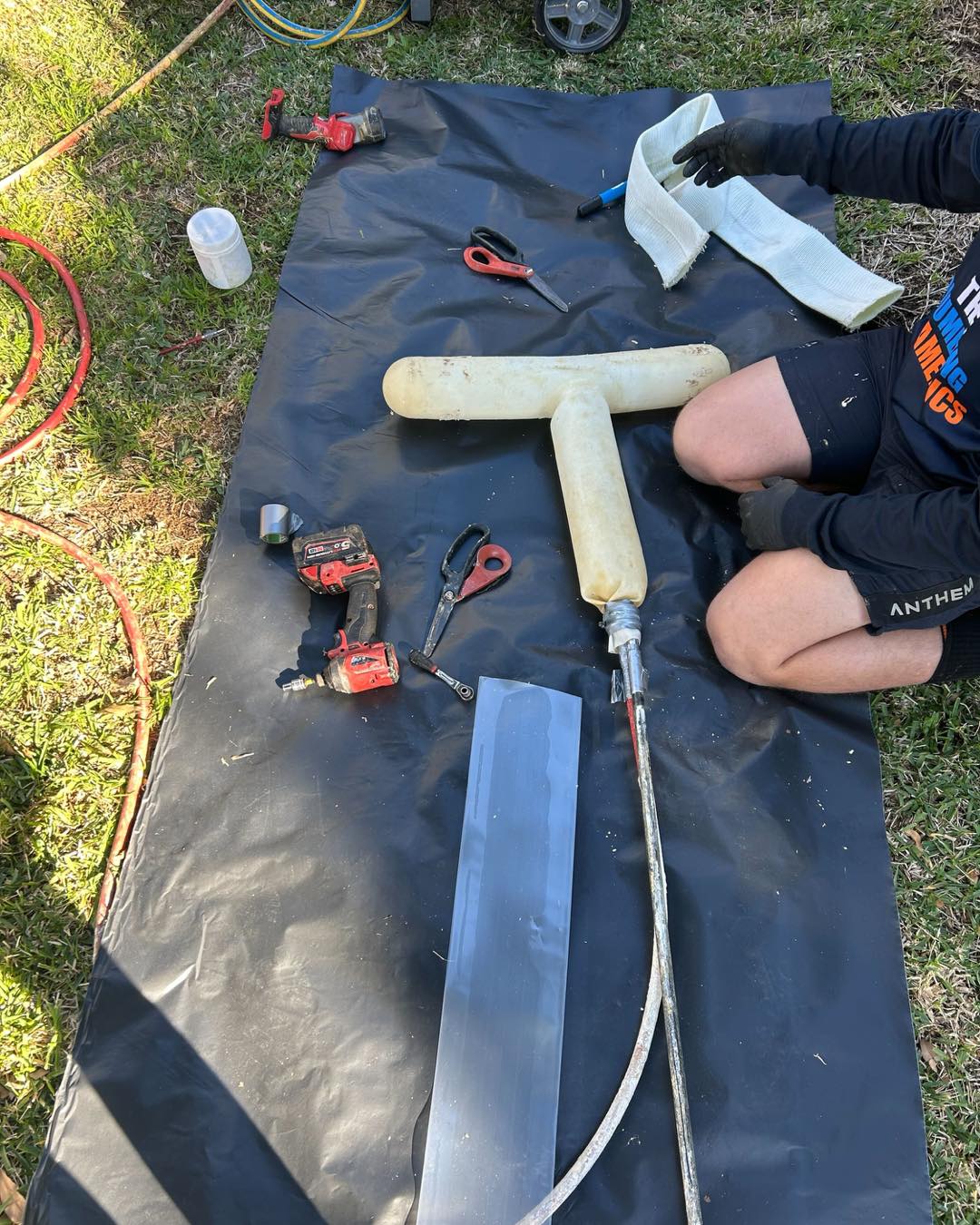
- Method: Inversion is the strongest and most commonly used method for continuous runs longer than three metres. The liner is pulled into the pipe using an inversion drum, so the resin sits on the outside of the liner and bonds directly to the existing pipe, sealing joints and cracks as it goes. Drag-in achieves a similar result over shorter runs where both ends of the pipe can be accessed, and involves pulling a resin-soaked liner through the pipe, inflating it, and curing it in place with UV light, which suits jobs where digging isn’t an option and precise placement matters. Patch relining repairs one or two specific damaged sections rather than the full length of pipe, and makes sense when the rest of the pipeline is still in good condition.
- Junctions: Any junction that the liner passes over during installation has to be cut open and reconnected once the lining is complete. Where tree roots have already gotten into that junction, the Australian Standard requires a patch to be installed there as well, and this is a legal requirement rather than something a plumber can choose to skip. This is also one of the more common places where a cheaper quote is hiding a shortcut, because leaving out a junction patch lowers the price on paper, but it also means the roots are likely to grow back into the drain within a year or two.
- Access: A pipe running under a driveway, a pool, a retaining wall, or several storeys up inside a commercial building takes longer to reach and requires more equipment on site than a pipe running under open lawn with clear access.
- Condition of the Existing Pipe: A pipe that’s full of tree roots or silt needs to be cleared with high-pressure water jetting before it can be relined at all, which adds time to the job. A pipe that has already collapsed can’t be relined and needs to be dug up instead.
- Location: Getting heavy relining equipment to the pipe is part of the cost. A job in the basement of a large building, where the equipment has to be carried down by hand, takes considerably more time and more staff than a straightforward job in a residential front yard.
Should You Choose the Cheapest Quote?
Not automatically. If one quote comes in noticeably lower than the others, it’s worth understanding why before you accept it, because the difference is often a matter of scope rather than efficiency.
A lower price can mean fewer metres have been counted, a different method has been substituted without being explained clearly, or junction patches and affected branch lines have been left out of the job entirely.
Comparing quotes properly means making sure each one covers the same length of pipe, the same method and the same amount of work, rather than simply choosing whichever number is smallest.

Watch Out for Pressure Tactics
A small number of companies use a low advertised call-out price to get a foot in the door, then push a much larger figure once they’re on site, sometimes with claims that the pipe is at risk of imminent collapse and needs to be fixed that same day.
If you’re ever asked to sign a contract or pay a large deposit on the spot, without time to get a second opinion or another quote, treat that as a reason to slow down rather than speed up. A legitimate CCTV inspection should be something you can review yourself, ideally on footage that clearly shows your own property, not just a verbal description of what was found.
Questions to Ask Before Accepting a Quote
Are there tree roots around the junctions, and if so, are junction patches included in the price?
Are the branch lines off the main pipe affected by roots, and are they included in the reline or left for another visit?
What warranty applies to the relined sections, and can that be provided in writing?
Is the pipe being relined by inversion, drag-in or patch, and why has that method been chosen for this particular pipe?
A plumber who is confident in their pricing and their workmanship will be able to answer all of these questions without hesitation.
Is Relining Always the Right Call?
Not always. If your damaged pipe runs under open lawn with good soil conditions and no large trees nearby, digging it up and replacing it can sometimes work out to be the more affordable option. Relining earns its higher upfront cost when the pipe runs beneath a driveway, a slab, a pool, a heritage tree, or anywhere else you would rather not disturb, and it’s also the better choice when the work needs to be completed quickly with minimal disruption to your household or a strata property.
Get an Accurate Price for Your Drain
The only way to get a confirmed price rather than a rough estimate is through a CCTV drain inspection, since it shows the pipe’s condition, length, diameter and junctions before any quote is written.
We service Rouse Hill, Kellyville, Castle Hill, Baulkham Hills, Bella Vista, Schofields, Marsden Park and the wider Hills District and Blacktown Council area, including acreage suburbs like Annangrove, Dural, Galston and Kenthurst.

Our Services
Get A Free Quote
Contact us today for a free, no-obligation quote on your plumbing needs.