

If the smell is strong, or you hear hissing: don’t keep reading on your phone inside the house. Get everyone out now, leave the door open behind you, and call for help from a safe distance. Call 000 if you believe there’s immediate danger.
Natural gas is odourless. That distinctive rotten-egg smell is an additive called mercaptan, put there specifically so you can detect a leak. So if you can smell it, take it seriously. Here’s exactly what to do, in order.
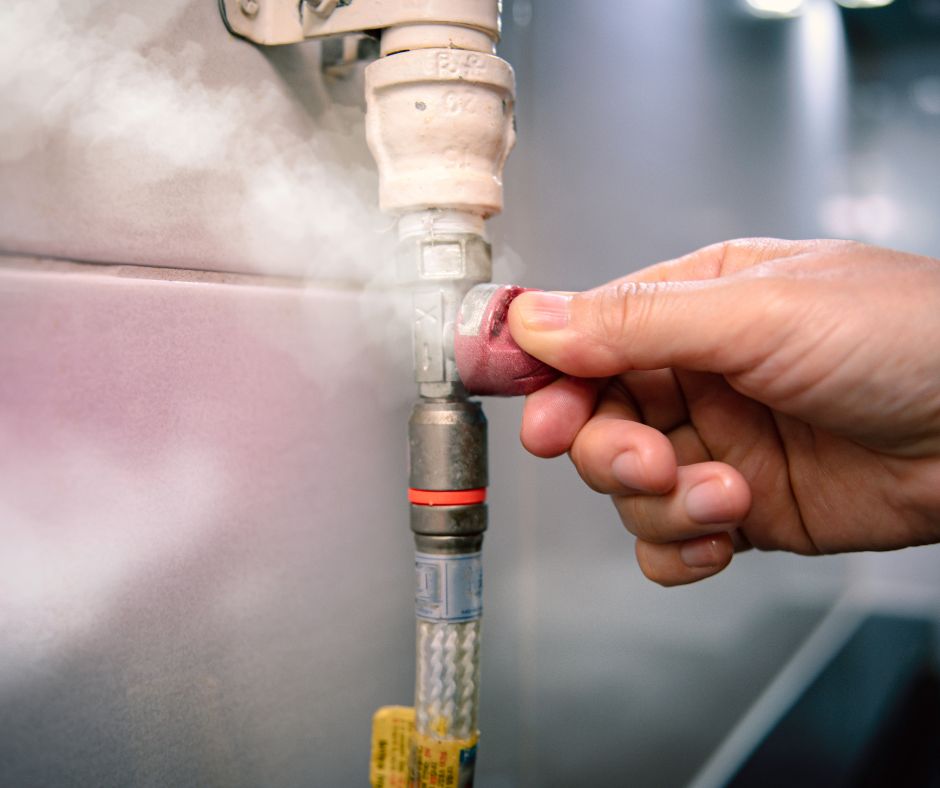
The 5 steps
- Don’t create a spark. No naked flames, no cigarettes, and just as important, don’t touch any electrical switches, on or off. Don’t use phones, doorbells or appliances inside the affected area. A tiny spark is all it takes.
- Ventilate. Open doors and windows as you move through and let the gas disperse.
- Turn off the gas at the meter, if it’s safe to reach. The shut-off valve is at your gas meter: turn the lever a quarter-turn so it sits crossways (perpendicular) to the pipe. Every adult in your home should know where this is before they ever need it.
- Get everyone outside, including pets, and keep people away from the area.
- Call from outside. For a suspected leak in the street or at the meter, call the gas network’s leak line (in most of Sydney that’s Jemena on 131 909, 24/7). For a leak in your home’s own gas lines or appliances, call a licensed gas fitter. We’re available 24/7 on 0430 054 007. If in doubt about safety, call 000.
Faint smell, comes and goes? Still take it seriously
Not every leak is a dramatic hiss. The more common scenario is a faint whiff near the stove, the heater, or outside near the meter, sometimes only noticeable at certain times. Small leaks at ageing fittings, regulators and appliance connections are exactly how bigger problems start, and even minor leaks waste gas you’re paying for. A licensed gas fitter can pressure-test your whole gas installation and pinpoint the leak with detection equipment. Guessing with soapy water on one visible joint doesn’t rule out the rest of the system.
Common sources we find in Hills District homes: ageing cooktop and bayonet connections, corroded external pipework, regulators past their service life, and appliance leaks after DIY renovations. If your home is 20+ years old and the gas fittings have never been checked, a pressure test is cheap peace of mind.
What NOT to do
- Don’t try to find the leak with a flame. It happens more than you’d think. Never.
- Don’t just air the house out and carry on. The gas disperses; the leak is still there.
- Don’t attempt DIY repairs. In NSW, gas work is illegal without a licence, for good reason. Repairs must be done by a licensed gas fitter, and significant work should come with a gas compliance certificate.
- Don’t ignore symptoms. Headaches, dizziness or nausea that improve when you leave the house can indicate gas exposure or a poorly burning appliance. Get fresh air and get the system checked. Seek medical advice if symptoms persist.
The other gas danger you can’t smell
Carbon monoxide (CO), produced by poorly ventilated or badly burning gas appliances, has no smell at all. Warning signs include yellow or “lazy” flames instead of crisp blue ones, soot marks around appliances, and pilot lights that keep going out (our guide to pilot lights that won’t stay lit covers this). Gas heaters and hot water systems should be serviced regularly. It’s the service nobody books until something goes wrong.
Frequently Asked Questions
Who do I call for a gas leak in Sydney, the plumber or the gas company?
It depends where the leak is. Leaks in the street, at the meter, or on the network side are handled by the gas network operator (Jemena’s 24/7 leak line is 131 909 in most of Sydney). Leaks in your home’s internal gas lines or appliances need a licensed gas fitter. If you’re not sure, call either. We’ll tell you honestly if it’s a network issue, and vice versa. If there’s immediate danger, call 000.
How do I turn off the gas at the meter?
Find the valve at your gas meter and turn the lever a quarter-turn so it sits crossways to the pipe. When the handle is in line with the pipe, gas is on; crossways is off. Only do this if it’s safe to approach the meter.
Is a faint gas smell ever normal?
A very brief smell when igniting a stove burner can occur, but any persistent, recurring or unexplained gas smell is not normal and should be investigated by a licensed gas fitter.
Can I fix a gas leak myself?
No. Gas fitting work in NSW must be carried out by a licensed gas fitter. DIY gas work is both illegal and genuinely dangerous.
Need a hand? Call The Plumbing Paramedics on 0430 054 007.
Our Services
Get A Free Quote
Contact us today for a free, no-obligation quote on your plumbing needs.