
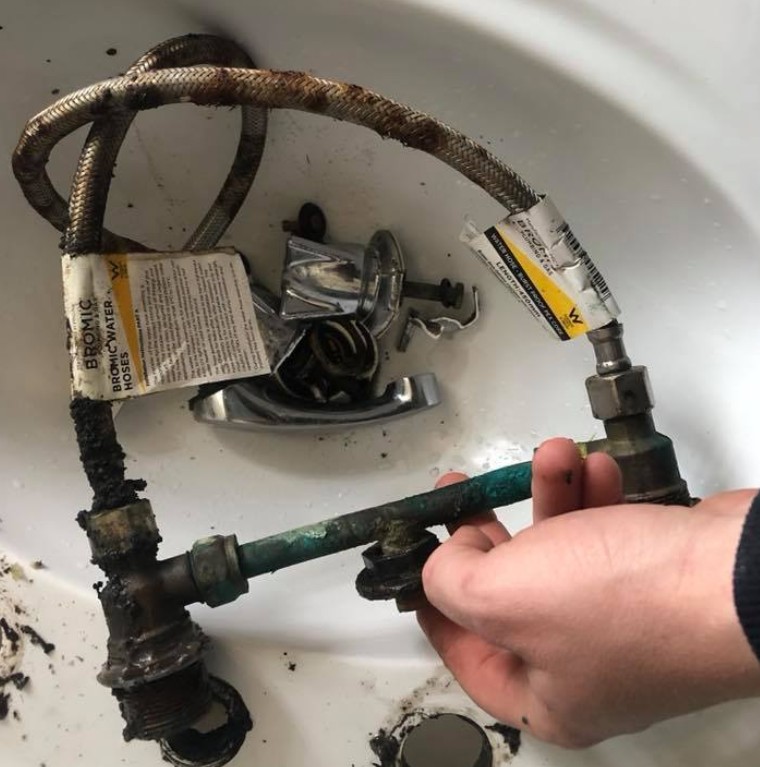
Most flexi-hoses last around 5 to 10 years, and many fail well before that. They’re the braided silver hoses under your taps, toilet, and kitchen sink, and when one bursts, it sprays mains-pressure water until someone shuts it off. That’s why they’re one of the most common causes of indoor flooding we see across the Hills District.
Here’s how long they really last, why they fail, and how to check yours before it lets go.

What is a flexi-hose?
A flexi-hose (flexible braided hose) is the short connector that links your water supply to a fixture, under the bathroom vanity, the kitchen sink, the toilet cistern, and the laundry. Inside is a rubber tube; around it is a woven stainless steel braid that holds it together under pressure.
They’re cheap, easy to fit, and they’re everywhere in modern Sydney homes. The trade-off is that they don’t last forever, and unlike a slow drip, a flexi-hose failure is sudden and high-volume.
How long do flexi-hoses last?
Plan on 5 to 10 years. Manufacturers often quote a lifespan in that range, and many products carry a warranty around the lower end of it. We’ve seen hoses go past ten years, and we’ve seen them fail at five.
The reason they don’t have a fixed expiry is that lifespan depends on conditions: water pressure, water quality, the quality of the hose itself, and where it’s installed. A cheap hose in a hot, damp vanity under high pressure won’t last as long as a quality one in an open, dry cupboard.
The safe rule is simple, if you don’t know how old yours are, treat anything over about ten years as due for replacement.
Why do flexi-hoses burst and flood homes?
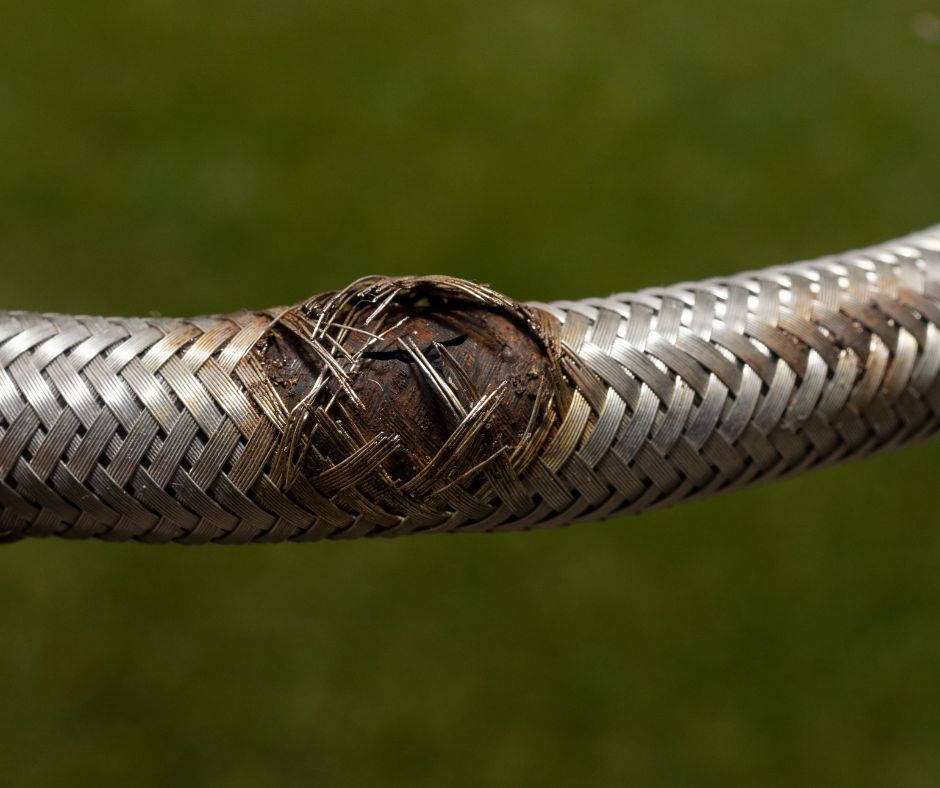
The braid is the giveaway. Over time, the stainless steel strands corrode and snap, the rubber inner perishes, and eventually the hose can’t hold mains pressure anymore. When it goes, it goes all at once.
A burst flexi-hose under a sink can release a large volume of water fast, and if it happens while you’re at work or asleep, it runs unchecked for hours. That’s how a $20 hose causes thousands of dollars of damage to floors, cabinetry, and ceilings below.
Common reasons they fail early:
Corrosion of the braid
Damp, poorly ventilated cabinets, especially bathroom vanities, speed up corrosion of the steel braid. If you can see rust spots or fraying wires, the hose is already failing.
Over-tightening or kinking at install
A hose that was bent too tightly, twisted, or over-tightened when it was fitted is under stress from day one. Kinks weaken the inner tube and the braid at the bend.
High water pressure
Mains pressure that’s too high puts every hose, fitting, and washer in the house under constant strain. If your pressure is high, hoses fail sooner, and so do other connections.
Cheap or aged hoses
A low-quality hose, or one that’s simply old, is the most common cause we see. Age plus poor ventilation plus pressure is the trio that ends in a flood.
How do you check your flexi-hoses?
You can inspect them yourself in a few minutes, and it’s worth doing twice a year. Open the cupboards under your sinks, vanity, and laundry, and look at the braided hoses.
Look for rust spots, fraying or broken wires in the braid, bulging or kinks, and any dampness or corrosion at the fittings. Run your eye along the whole length. If anything looks rusty, frayed, or bulged, or you simply can’t remember when they were last replaced, book a plumber to swap them.
While you’re down there, find your main water shut-off valve and make sure you know how to turn it off. In a burst, that’s the tap that stops the flood.
Can you replace a flexi-hose yourself?
You can, swapping a flexi-hose is legal DIY for a homeowner in NSW, much like replacing a tap. But it’s worth doing right, because the connection has to seal under constant pressure, and the failure mode if you get it wrong is a flood.
If you’re confident, turn off the water at the fixture or main, release the pressure, and fit a quality WaterMark-approved hose without over-tightening or kinking it. If you’d rather not risk it, or you want every hose in the house checked and replaced at once, that’s a quick job for us. We often do it alongside tap work; see our tap repairs and installation page.
If one has already burst, shut off your water at the main and call us. A burst flexi-hose is exactly the kind of emergency plumbing we respond to 7 days a week.
Frequently Asked Questions
How long do flexi-hoses last before they need replacing?
Most flexi-hoses last around 5 to 10 years, and many fail before reaching ten. Manufacturers commonly quote a lifespan in that range, but the real figure depends on water pressure, water quality, the quality of the hose, and where it’s installed, a hose in a damp, poorly ventilated vanity under high pressure wears out faster than one in a dry, open cupboard. Because failure is sudden and high-volume, the safe approach is not to wait for a problem. If you don’t know how old your hoses are, treat anything over about ten years as due for replacement, and inspect them twice a year for rust or fraying. Replacing an ageing hose for a small cost is far cheaper than repairing a flooded bathroom or kitchen after one bursts unexpectedly.
Why do flexi-hoses burst and cause flooding?
Flexi-hoses burst because the stainless steel braid around the rubber inner tube corrodes and snaps over time, and the rubber itself perishes, until the hose can no longer hold mains-pressure water. When it fails, it releases a large volume of water all at once rather than a slow drip, and if it happens while no one’s home, it can run for hours. That’s how a cheap hose causes thousands of dollars of damage to floors, cabinets, and ceilings below. The failure is sped up by damp, unventilated cabinets, over-tightening or kinking during installation, high water pressure, and low-quality or simply old hoses. Bathroom vanities are a particular hot spot because they trap moisture. Checking the braid for rust and fraying twice a year is the best early warning you’ll get.
Can I replace a flexi-hose myself in NSW?
Yes, replacing a flexi-hose is legal DIY for a homeowner in NSW, similar to replacing a tap, so you don’t need a licensed plumber to do it. That said, it’s worth doing carefully, because the connection has to seal under constant mains pressure and the consequence of getting it wrong is a flood. If you take it on, turn off the water at the fixture or the main, release the pressure first, and fit a quality WaterMark-approved hose without over-tightening or kinking it, as both stress the hose and shorten its life. If you’d rather not risk it, or you want every hose in the house inspected and replaced in one visit, that’s a quick, low-cost job for a plumber. If a hose has already burst, shut off the water at your main straight away and call us.
How do I know if my flexi-hoses need replacing?
Open the cupboards under your sinks, bathroom vanity, and laundry and look closely at the braided silver hoses. Signs a hose needs replacing include rust spots on the braid, frayed or broken wires sticking out, bulging or kinking along the hose, and any dampness or corrosion around the fittings. Run your eye along the full length of each one. If you spot any of these, or you simply can’t remember when they were last changed, book a replacement, because a failing braid is the warning sign that comes before a burst. It’s worth a quick check twice a year. While you’re under there, locate your main water shut-off valve and make sure you can turn it off quickly, since that’s what stops a flood if a hose lets go when you least expect it.
Does water pressure affect how long flexi-hoses last?
Yes. High mains water pressure puts every hose, fitting, and washer in your home under constant strain, and flexi-hoses fail sooner when pressure is consistently too high. If your taps slam or bang when you shut them off (water hammer), or your pressure feels unusually strong, that’s worth investigating, not just for the hoses but for the whole system. Pressure that’s too high can shorten the life of hoses, mixers, and appliances across the house. A plumber can test your mains pressure and, if it’s too high, fit a pressure-limiting valve to bring it into a safe range, which protects your hoses and fixtures over the long term. If you’ve already had one hose fail early, high pressure is one of the first things we’d check on site.
What should I do if a flexi-hose bursts?
Shut off your water at the main stop tap immediately, that’s the single most important step, because it stops more water entering the house. If you can, also turn off the isolating valve under the affected fixture. Then mop up and move what you can to limit damage to floors and cabinetry, and check whether water has reached anything electrical; if it has, don’t touch it and switch off power at the board only if it’s safe to do so. Once the water’s off, call a plumber to replace the failed hose and check the others, since a burst on one ageing hose often means the rest are close behind. A burst flexi-hose is a genuine plumbing emergency, and it’s exactly the kind of urgent plumbing call we respond to across the Hills District.
Worried about your hoses, or already mopping up?
A two-minute look under your sinks today can save you a flooded home later. If your flexi-hoses are rusty, frayed, or simply old, we’ll replace them quickly, check your water pressure while we’re there, and put your mind at ease.
Call The Plumbing Paramedics on 0430 054 007 for a free quote, or if one’s already burst, shut off your water and call us for emergency plumbing any time.


Our Services
Get A Free Quote
Contact us today for a free, no-obligation quote on your plumbing needs.