
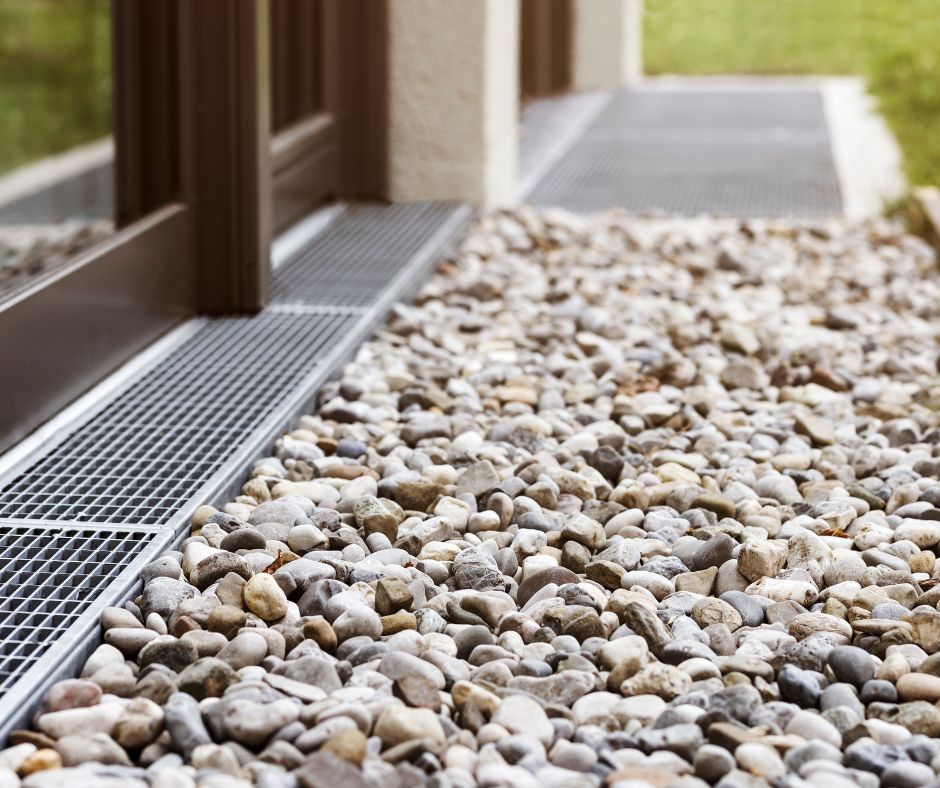
Not all drains solve the same problem. When water is threatening your home, landscaping or paved surfaces, the solution depends on whether the issue is from beneath the ground or across the surface. That’s why two very different systems are often recommended: French drains and trench drains.
Both manage water effectively, but how, where, and why they are installed is completely different.
What’s the Real Difference?
The key distinction lies in where the water is coming from:
- French drains manage subsurface water, absorbing groundwater before it builds up in soil.
- Trench drains capture surface runoff, moving stormwater quickly from hard surfaces like driveways and pool surrounds.
What Is a French Drain?
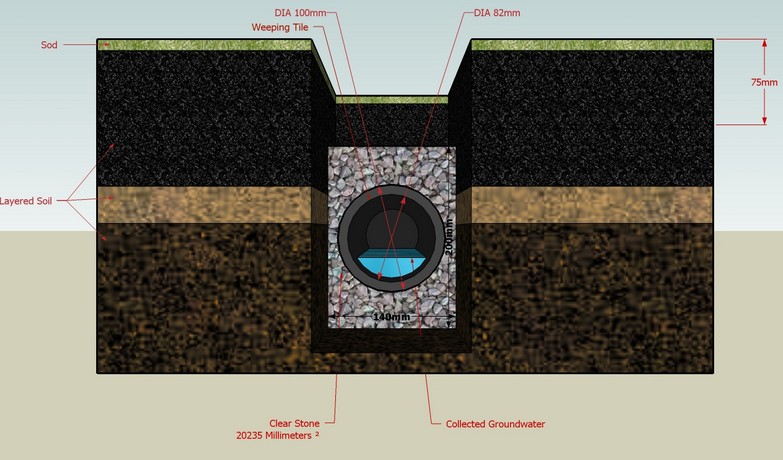
A French drain is a subsurface drainage system made up of a perforated pipe laid in a sloped trench, surrounded by layers of gravel or rock. As water builds up in the surrounding soil, it flows through the gravel and enters the pipe through small holes, then drains away under gravity to a discharge point or stormwater system.
French drains are ideal for:
- Redirecting water from home foundations
- Preventing water pooling in low-lying yards
- Reducing pressure behind retaining walls
- Managing stormwater on sloped or clay-based blocks
- Stopping water ingress into basements or under-floor spaces
The gravel acts as a filter, keeping soil out while allowing water to flow through freely.
What Is a Trench Drain?
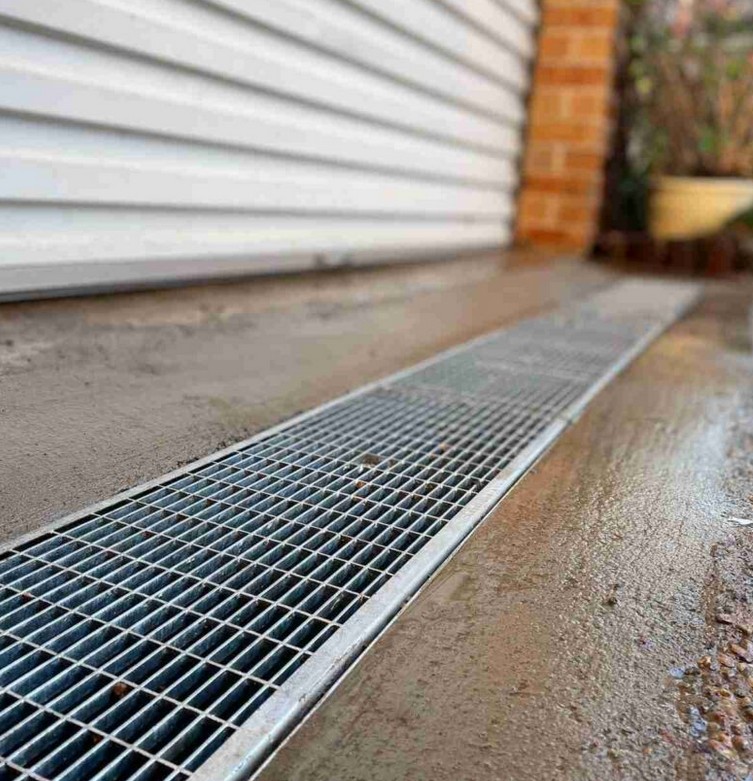
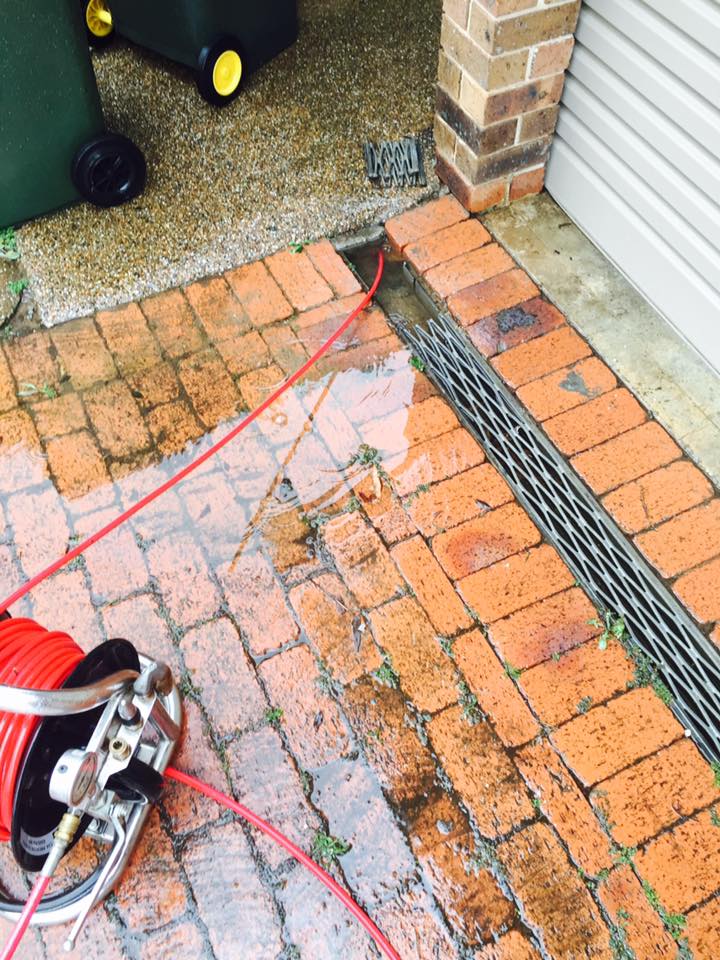
Trench drains (also known as, channel, strip and linear drains) are surface-level channels covered with grates. They intercept water before it can soak into the ground, guiding it across a surface into the stormwater system.
Unlike French drains, trench drains are highly visible and designed to complement concrete, paving or landscaping.
Trench drains are used for:
- Driveways (especially sloping driveways)
- Garage thresholds
- Pool surrounds
- Patios and courtyards
- Footpaths and public areas
- Industrial or commercial sites
Trench drains typically consist of a preformed or poured concrete base, modular drain channels and a metal or plastic grate. They work quickly during downpours, preventing flooding and pooling.
What About Swale Drains?
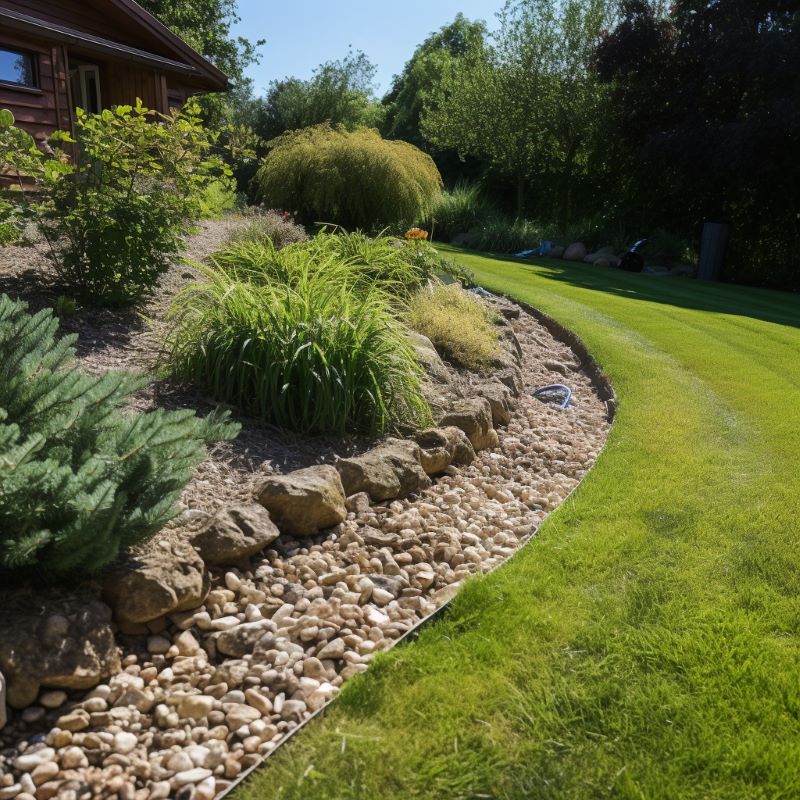
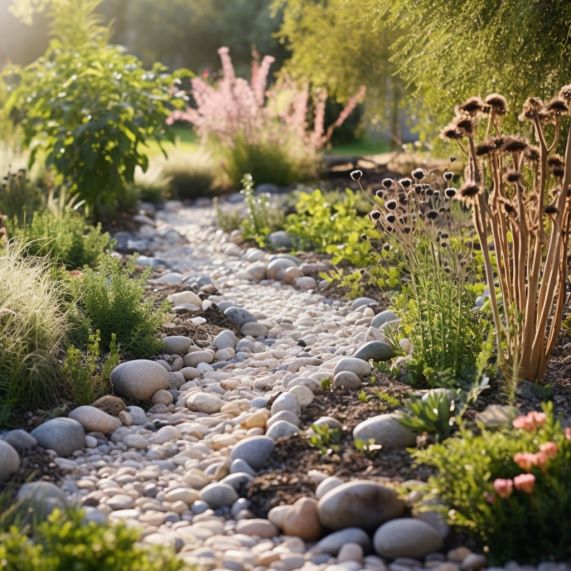
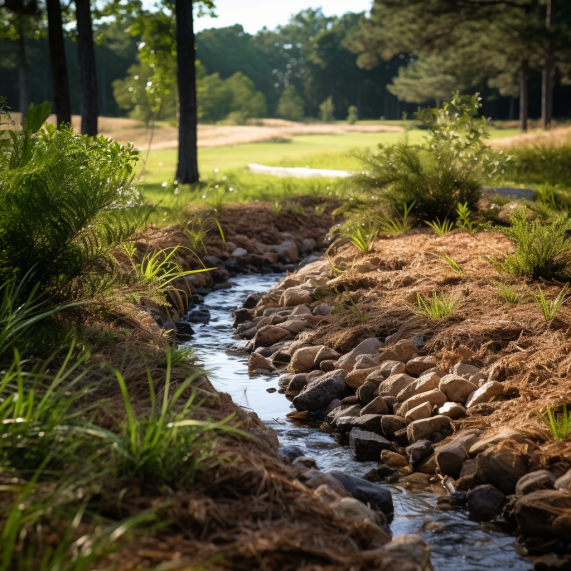
Another surface drainage option is a swale drain, a shallow channel shaped into the ground, often lined with rocks or native plants. It mimics a dry creek bed and becomes functional during heavy rain. Swales are a great option on larger blocks, especially acreage, as they blend into the landscape and help direct water toward rain gardens or dispersal pits.
We’ve installed swales for clients across semi-rural Sydney suburbs, providing an eco-conscious alternative to hard infrastructure.
Key Differences at a Glance
| Feature | French Drain | Trench Drain |
|---|---|---|
| Water type | Subsurface water | Surface runoff |
| Installation depth | Buried (subsurface) | At surface level |
| Materials | Gravel and perforated pipe | Concrete or plastic channel + grates |
| Applications | Foundations, yards, retaining walls | Driveways, patios, pool surrounds |
| Maintenance | Low (occasional flushing) | Regular cleaning of debris from grates |
Installation Considerations
French Drain Installation Steps:
- Excavate a sloped trench
- Lay landscape fabric
- Add gravel base
- Install perforated pipe
- Cover with more gravel
- Replace topsoil or turf
Channel Drain Installation Steps:
- Excavate a level trench
- Install a concrete or compacted base
- Position the trench drain channel
- Connect to the stormwater system
- Fit grates or covers
French drains require deeper digging, while trench drains demand precise levelling for optimal flow.
Maintenance Needs
French drains are mostly underground and need less frequent maintenance. Every few years, check for blockages and ensure the discharge point remains clear.
Trench drains should be cleaned more often. Remove leaves, silt and debris from the grates and flush the channels if water starts pooling.
Blocked stormwater drains are common along garages or driveways, especially during storm season. A blocked trench drain can send water straight toward your home or garage door, which is why regular cleaning is essential.
Which One Do You Need?
If your problem is groundwater seeping into your yard, behind retaining walls, or into basements, a French drain is the right solution.
If your issue is rain pooling on driveways or patios, then a trench drain or linear drain is more appropriate.
Still unsure? Our expert drainage plumbers at The Plumbing Paramedics can inspect your property and design a system tailored to your block, soil type, and stormwater flows.
We install both systems, as well as stormwater pits, spoon drains, and backyard drainage solutions.
FAQs
What is the main difference between a French drain and a trench drain?
French drains manage underground water with perforated pipes buried in gravel, while trench drains manage surface runoff with open channels and grates.
Can I use a trench drain in a garden?
Trench drains are better suited to hard surfaces. In garden areas, a French drain or swale is usually more effective and visually discrete.
How long do French drains last?
A properly installed French drain can last 10–30 years, depending on soil conditions and maintenance.
Do trench drains require council approval?
It depends on your local council’s requirements and whether the drain connects to public infrastructure. We handle these approvals as part of our service.
Can both systems be used together?
Yes. Many properties benefit from a combination of French and trench drains to manage both subsurface and surface water.
How much maintenance do trench drains need?
Grates should be checked and cleaned monthly during wet seasons to prevent blockages and overflow.

Our Services
Get A Free Quote
Contact us today for a free, no-obligation quote on your plumbing needs.